David Berkowitz
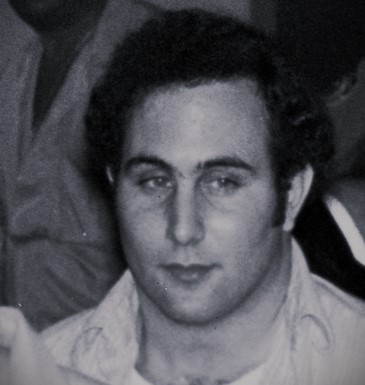
Image Source: Vernun Argus press photographer. 10 August 1977, Public domain, via Wikimedia Commons
What Was the Accusation?
David Berkowitz, widely known as the “Son of Sam,” terrorized New York City during a series of shootings in 1976 and 1977 that killed six people and wounded seven others. The attacks, often directed at young women or couples in parked cars, generated intense public fear and one of the city’s most notorious manhunts. Berkowitz also sent taunting letters to police and the press. He was arrested on August 10, 1977, after investigators traced a parking ticket issued near the scene of his final attack to his car. He later pleaded guilty and received six consecutive sentences of 25 years to life.
Years after his conviction, Berkowitz began publicly describing himself as remorseful and repeatedly sought to distance his present identity from the “Son of Sam” persona. In correspondence with Houston crime-victim advocate Andy Kahan, he expressed regret for the killings, acknowledged the continuing pain inflicted on victims and families, and said he believed he deserved to remain in prison for life. He also assisted Kahan’s campaign against the commercial trade in murder memorabilia, telling collectors and dealers that he did not want his crimes used for profit.
In an April 2, 2002 letter addressed to his victims, Berkowitz apologized for the grief and suffering caused by his crimes, said he did not expect forgiveness, and stated that he was not seeking parole. In later interviews, including a 2017 CBS News prison interview, he again said he carried guilt and remorse and wished he could undo the harm. His public image-repair effort has therefore combined direct expressions of remorse with corrective conduct, religiously framed claims of personal transformation, and explanations that describe his earlier life as a period of profound psychological and spiritual darkness.
Key Apologia Strategies:
Mortification, Corrective Action, Bolstering, Defeasibility
Video
Transcript
David Berkowitz letter to his victims (April 2, 2002):
To the victims of my crimes.
I am so sorry for the pain, grief and suffering that I have put you through. I know that you’re still suffering till this very day. My criminal actions have torn apart your lives, and I regret this.
I hope and pray with all my heart that you will be able to heal as much as possible and that you will be able to go on with your lives.
You have every right to be angry with me and even to hate me. I do not expect you to forgive me either. But no matter what, I will always pray for each of you, and I wish you the best.
And if this will in some way help to bring you some peace and closure, I want to share with you my feelings concerning the “parole” issue.
I am not trying to get parole, nor am I seeking it. I do not believe in doing this. I have accepted my sentence and my punishment. I admit, too, that I deserve to be in prison for the rest of my life. And I am not seeking your pity, but I am simply stating what I feel and believe.
So please do not be upset about this upcoming parole hearing. I am not looking forward to it. It’s merely a procedure that’s mandated by law, and in my situation, you have nothing to worry about. I will be incarcerated for a long time to come.
I hope that what I’ve shared in this letter will help to bring you some comfort and ease your minds. Thank you, and may God always bless you.
David Berkowitz
April 2, 2002
David Berkowitz CBS News interview (2017) — Excerpts:
Maurice DuBois : Is this a special place for you?
David Berkowitz: Yeah it is. It’s a place of refuge.
Maurice DuBois: Refuge?
David Berkowitz: Refuge from the storms of life. If you know anything about prison, there’s a lot of storms. It’s not exactly a happy place. In prison men are walking around carrying a lot of pain. I know I have a lot of pain inside me over you know, things that happened and um, this is a place where you can come and pour your heart out to God.
David Berkowitz: My name is David Berkowitz and I’ve been locked up since the time of my arrest — just under 40 years.
Maurice DuBois: You just turned 64.
David Berkowitz: Yeah. I just turned 64. Yeah.
Maurice DuBois: How do the guys look at you, how do they see you, how do they perceive you?
David Berkowitz: Some guys really again, because of the passing of time they’re not even familiar with the case or anything. They may have heard about it. But it doesn’t … I’m just another face in the crowd. No special attention, no special anything, that’s the way I want it to be.
Maurice DuBois: I want you, if you will, to take me through what it’s like. Just tell me what your life is like.
David Berkowitz: Uh, well, in prison there’s a routine. You know, you can get up in the morning whenever you want … Some guys go to work assignments. Some guys go to classes. I go later on to the library where I work in the morning as a clerk in the prison’s library.
***
David Berkowitz: I mean grew up in the Bronx. I had good times and bad times. I had some struggles over certain issues that happened … but I also had times of adventure when I played ball with my friends … it was many ways a normal childhood … but I also wrestled with self-destructive behavior.
Maurice DuBois: Why?
David Berkowitz: Well, when I was about 4 or 5, I learned that I was adopted. When I asked about who my parents were at birth. My dad and mom, well meaning, told me that my mother died while giving birth to me … Later on I found out that of course, she was alive and well. We had a wonderful reunion.
Maurice DuBois: It wasn’t even true what they told you.
David Berkowitz: Yeah, they meant well because they were told by the experts that’s what you tell an adopted child … when they naturally ask questions. Looking in retrospect, that characterized much of my life. I struggled with a lot of depression as a child, and obsessions with death because I thought I deserved to die.
Maurice DuBois: So take me to when your 14, your mom dies.
David Berkowitz: Yeah, it was a difficult time. Yeah, well, just when you lose someone that you love is a sense of mourning. I tried to put it out of my mind. I was carrying around a lot of guilt … I was carrying around a lot of shame that I deserved to be punished. I can’t explain those things.
Maurice DuBois: For your mom’s death?
David Berkowitz: Yeah. Maybe I was angry at God, and then, well, my birth mother, and then of course, my adoptive mother, too. You know I found it very difficult.
***
David Berkowitz: After I got out of the service, I went to look up a lot of old friends. Guys I used to hang out with and things. I found everybody pretty much moved on in the three years I was absent. So I came back to find I was on my own kind of, you know.
David Berkowitz: And I wanted to eventually get my own apartment. You know, I wanted to find a girl, maybe get married, and raise a family. I had all kinds of normal, perfectly normal hopes and dreams.
Maurice DuBois: What would you tell 23-year-old David Berkowitz today?
David Berkowitz: Uh, turn around before it’s too late because destruction is coming, you know.
***
Maurice DuBois: The dog got on Berkowitz’ nerves. Apparently the dog barked too much, Berkowitz could hear him from his window. He tried to kill the dog, the dog didn’t die. And then he said, in his own twisted way, that the dog told him to kill.
Maurice DuBois: So Berkowitz lived on the top floor. He had a clear view, right into the back yard here where the dog lived, owned by a guy named Sam Carr. Hence the name “Son of Sam.”
David Berkowitz: I wasn’t comfortable there. I felt very isolated; I didn’t really have much of a social life. … I started to get into a lot of satanic stuff. So I really was opening myself up to some very dark forces.
Bill Clark: It’s not like he had a friend or anything. There was nobody. He had a hole in the wall in the apartment where it said that Mrs. something or other and her kids lived in the wall. You know, he was certifiably nuts.
David Berkowitz: There was a battle going on inside me.
Maurice DuBois: In your head?
David Berkowitz: Uh … wherever, you know, just a battle going on.
Maurice DuBois: Right.
David Berkowitz: Yeah.
Maurice DuBois: I guess, so here’s the thing, here’s a Christian man, who’s had loving parents, a man who knows right from wrong, who’s very thoughtful, um yet at some there you killed two people to start this whole thing.
***
David Berkowitz: It was just … a — a break from reality, thought I was doing something to appease the devil. I’m sorry for it, but I really don’t want to talk about it anymore because —
Maurice DuBois: Appease the devil?
David Berkowitz: At this time I was serving him. I was serving him. I feel that he had taken over my mind and body. And I just surrendered to those very dark forces, I regret that with all my heart but that was like 40 years ago.
***