Red Berenson, University of Michigan Hockey
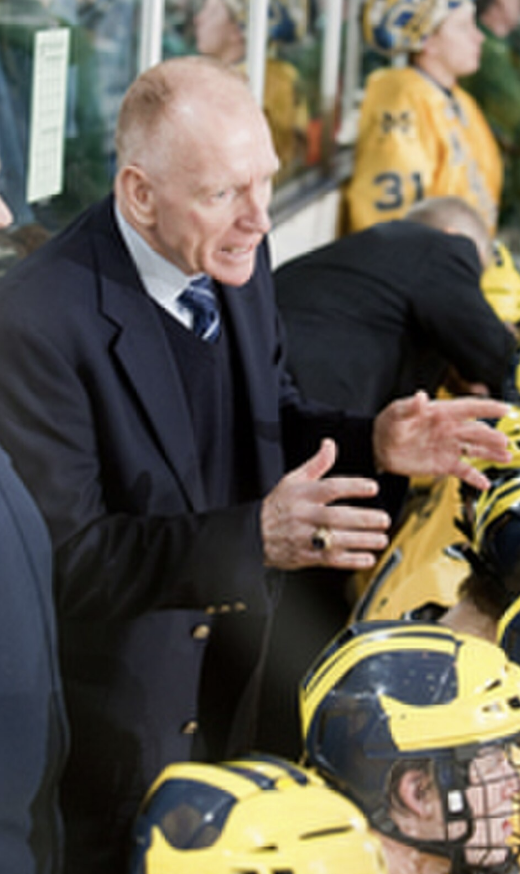
Image Source: Gobluewolf, Public domain, via Wikimedia Commons
What Was the Accusation?
On September 9, 2026, 16 former University of Michigan men’s hockey players filed a federal lawsuit against the university and its Board of Regents alleging that players were subjected to ritualized, sexualized hazing while participating in the program between 1984 and 2001. The plaintiffs, identified as John Does, allege that older teammates carried out abusive initiation practices that included forced nudity and genital shaving, sexual assault with objects, burning pubic hair with a blowtorch, forced alcohol consumption, eating live fish, and other acts of physical and sexual humiliation. The complaint characterizes the alleged conduct as systematic abuse rather than isolated misconduct. The allegations have not been proven in court.
The lawsuit further alleges that longtime head coach Red Berenson and other hockey staff knew about, facilitated, condoned, or failed to stop the hazing, and that players were made to understand participation as part of belonging to the Michigan program. Berenson coached Michigan from 1984 through 2017. He told the Associated Press after the lawsuit was filed that he had not received complaints about the conduct alleged and disputed the characterization that the coaching staff directed or encouraged abuse. The plaintiffs accuse the university and regents of sex discrimination under Title IX and seek damages as well as sexualized-hazing prevention training for Michigan athletes.
The University of Michigan responded that the allegations were disturbing but said many elements of the complaint were misleading. University spokesperson Paul Corliss emphasized that hazing violated university policy, noted that Michigan adopted an anti-hazing policy in 1982, and pointed to current annual training for student-athletes. The university expressly denied responsibility or liability for the claims. Its response therefore combined denial with bolstering and corrective-action claims about institutional policy, training, and present-day student safety.
Key Apologia Strategies
Denial, Shifting Blame, Attacking the Accuser, Defeasibility
Video
N/A
Transcript
University of Michigan statement responding to the lawsuit (September 9, 2026):
“The allegations outlined in the plaintiffs’ complaint are disturbing, but many elements of the complaint are misleading.
The former student athletes, who attended the university more than 25 years ago, describe behavior at the hands of fellow teammates that allegedly happened in the 1980s and 1990s. To the extent any former student athlete engaged in hazing or other misconduct, they were violating university policy. The university denies that it is any way responsible or liable for the claims alleged.
The university first adopted an official anti-hazing policy in 1982. It was one of the first universities in the country to do so, and it has earned its standing as a leader in this area. Today, all university student athletes are required to complete annual training on university policies and protections against hazing, discrimination, and other forms of misconduct. We are committed to an environment of safety for all of our students.”
Excerpts of Red Berenson’s Interview with M Live on September 10, 2026:
“We knew there was a certain element of initiation on our team, and it was usually orchestrated by the seniors. We didn’t promote it. We didn’t question it. We didn’t encourage it.”
“But as time went on and when you think about it like, we spend all our energies as coaches recruiting the incoming freshmen, so the last thing we want to see is for these kids to be abused by their teammates. It’s disappointing when it comes out now because I’ve never had a player come in and complain to me or, as far as I know, never came in and complained to the assistant coaches about how terrible it was. It was usually how they felt really welcomed. Were there some mishaps? Were there some bad experiences? Possibly, but it wasn’t a matter of direction or encouragement from the coaching staff or from the administration.”
“When they say sexual, I’m guessing they’re stretching this.”
“If we’re promoting our program to be one of the best programs, we can’t even take a chance at something like this happening. I don’t know how many other programs came out and declared that there would be no initiation or hazing or anything similar to that, but we were comfortable in doing that. I think the whole administration felt the same way. It’s kind of a loose cannon. You don’t know what these kids are going to do. I always trusted my seniors because they were the ones that were promoting and leading it. The coaches weren’t involved at all. There was no promotion, there was no encouragement and there was no follow up in terms of what happened.”
“I would say that this should have been a conversation, a private conversation between the head coach, the captain, and the assistant coaches so we’re all on the same page, that this will not happen again or shouldn’t have happened. But then when I read that their playing time could have been affected by their lack of encouragement or participation, we had no idea who liked it, who didn’t like it, and so on. I would just say I’m sorry they had to carry this all these years and now come out like this. It’s got to be as embarrassing for them as it is for us, and at least we know our side of it.”