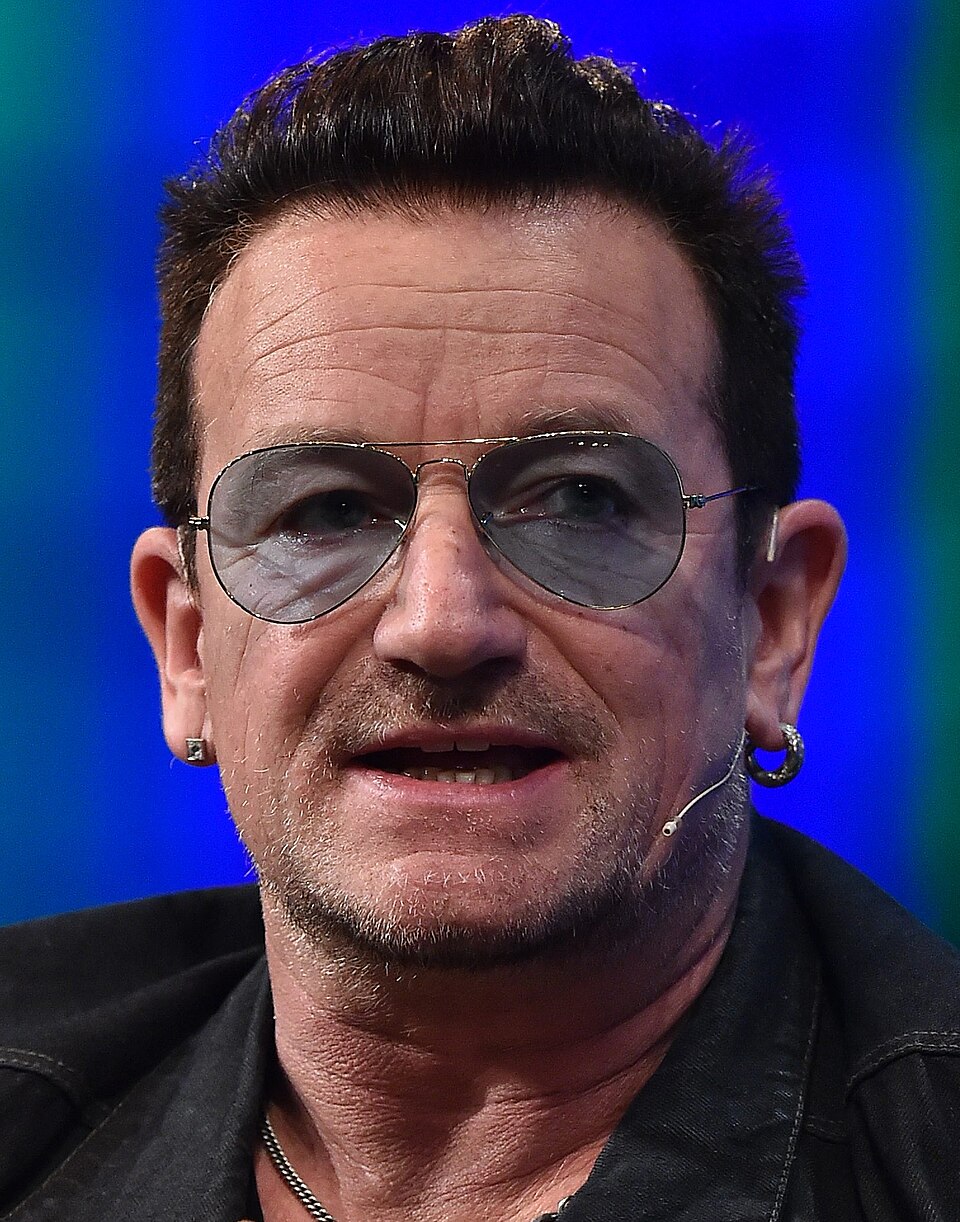
Image Source: Web Summit, CC BY 2.0, via Wikimedia Commons
What Was the Accusation?
U2 and its lead singer Bono faced widespread criticism in September 2014 after the band partnered with Apple to distribute its new album, Songs of Innocence, to more than half a billion iTunes customers. Apple announced the album at its September 9 product event and described the promotion as the largest album release in history. Rather than simply making the album available for customers who wanted it, however, the release placed Songs of Innocence into users’ iTunes libraries. For customers who had enabled automatic music downloads, songs could also appear on their devices without an individual decision to obtain the album.
The promotion was intended to expose U2’s music to an enormous worldwide audience, but many customers objected to having an album placed in their personal music libraries without their consent. The backlash raised questions about digital privacy, consumer control, and the increasingly blurred boundary between a promotional gift and unwanted content. Apple subsequently created a tool that allowed customers to remove Songs of Innocence from their accounts.
On October 14, 2014, Bono addressed the controversy during a video question-and-answer session with U2 fans on Facebook. After a fan characterized the automatic distribution as rude and asked the band never to do it again, Bono apologized. He acknowledged that U2 had become carried away with what he considered a good idea and attributed the decision to a mixture of artistic ego, generosity, self-promotion, and fear that the band’s new songs would not be heard. His response combined an explicit apology with an explanation of the motivations behind the promotion.
Bono revisited the episode years later in his 2022 memoir, Surrender: 40 Songs, One Story. His retrospective account was substantially more direct about responsibility. He acknowledged that distributing the album to people who had not asked for it crossed a boundary and explicitly accepted responsibility for the decision rather than assigning blame to Apple, U2’s management, or his bandmates.
Key Apologia Strategies
Mortification, Good Intentions, Defeasibility, Bolstering
Video
Transcript
Excerpt from Bono’s response during U2’s Facebook Q&A (October 14, 2014):
“Oops. I’m sorry about that. I had this beautiful idea and we got carried away with ourselves. Artists are prone to that kind of thing. Drop of megalomania, touch of generosity, dash of self-promotion, and deep fear that these songs that we poured our life into over the last few years mightn’t be heard. There’s a lot of noise out there. I guess we got a little noisy ourselves to get through it.”
Excerpt from Bono’s book Surrender: 40 Songs, One Story (2022):
“If just getting our music to people who like our music was the idea, that was a good idea. But if the idea was getting our music to people who might not have had a remote interest in our music, maybe there might be some pushback. But what’s the worst that could happen? It would be like junk mail. Wouldn’t it? Like taking our bottle of milk and leaving it on the doorstep of every house in the neighborhood.
Not. Quite. True.
On September 9, 2014, we didn’t just put our bottle of milk at the door but in every fridge in every house in town. In some cases we poured it onto the good people’s cornflakes. And some people like to pour their own milk. And others are lactose intolerant.
I take full responsibility. Not Guy O, not Edge, not Adam, not Larry, not Tim Cook, not Eddy Cue. I’d thought if we could just put our music within reach of people, they might choose to reach out toward it. Not quite. As one social media wisecracker put it, “Woke up this morning to find Bono in my kitchen, drinking my coffee, wearing my dressing gown, reading my paper.Or, less kind, “The free U2 album is overpriced.” Mea culpa.
At first I thought this was just an internet squall. We were Santa Claus and we’d knocked a few bricks out as we went down the chimney with our bag of songs. But quite quickly we realized we’d bumped into a serious discussion about the concern people have about the access of Big Tech to our lives. The part of me that will always be punk rock thought this was exactly what The Clash would do. Subversive. But subversive is hard to claim when you’re working with a company that’s about to be the biggest on earth.”