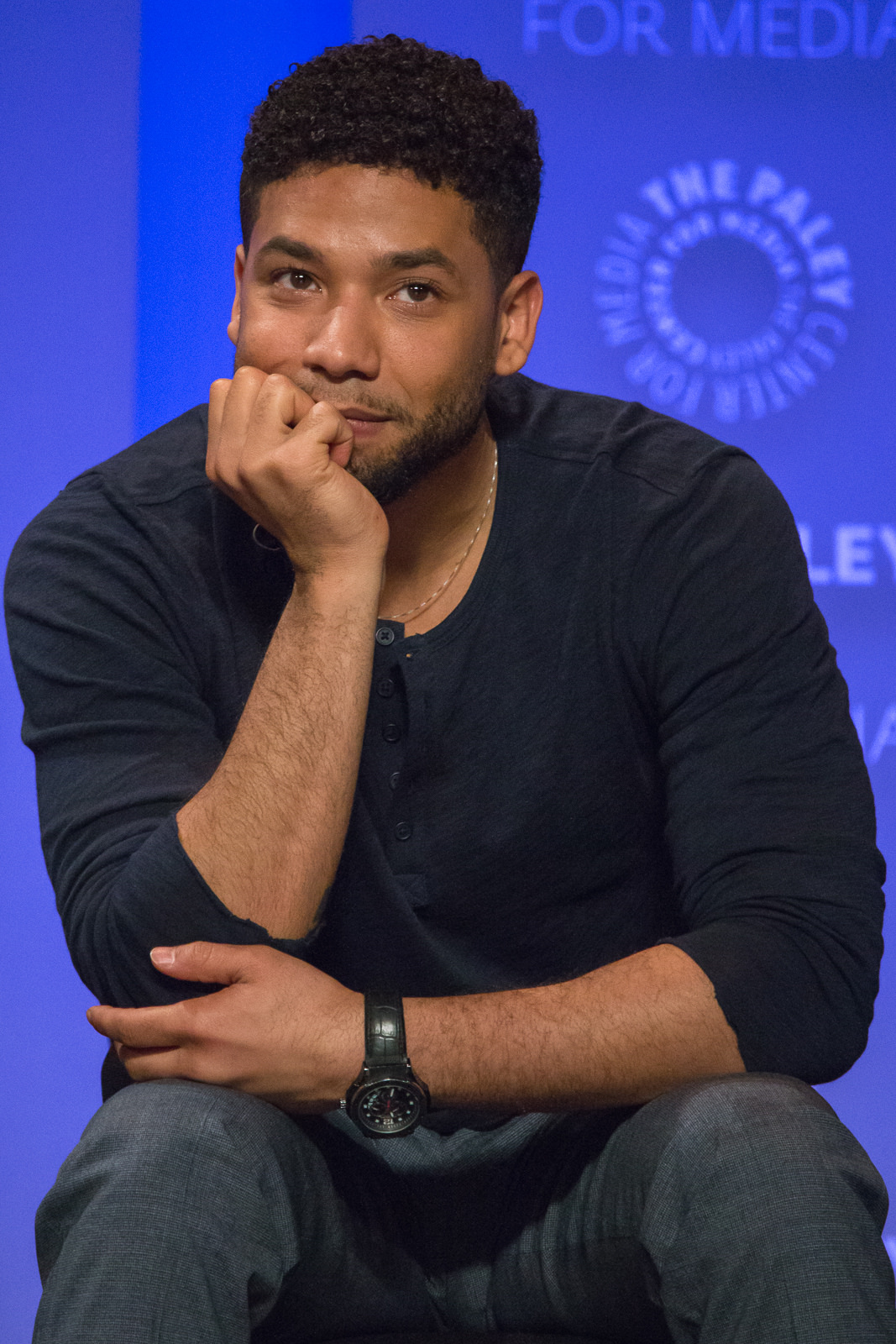
Image Source: Dominick D, CC BY-SA 2.0, via Wikimedia Commons
What Was the Accusation?
Actor and singer Jussie Smollett became the subject of a highly publicized criminal investigation in early 2019 after Chicago police accused him of staging and falsely reporting a racist and homophobic attack against himself. Smollett, then a cast member on the Fox television drama Empire, told police that he was attacked in Chicago during the early morning hours of January 29, 2019. According to his account, two masked men struck him, directed racist and homophobic slurs at him, poured a chemical substance on him and placed a rope around his neck. Smollett publicly maintained that the incident was a genuine hate crime.
The investigation soon changed direction. Chicago police alleged that Smollett had arranged the encounter with brothers Abimbola and Olabinjo Osundairo and paid them $3,500. Prosecutors alleged that Smollett wanted the encounter to appear to be a racist and homophobic assault and that he subsequently made false statements to investigators. On February 20, 2019, Smollett was charged with felony disorderly conduct for allegedly filing a false police report. Chicago Police Superintendent Eddie Johnson accused him of staging the incident and publicly called on him to apologize to the city. Smollett denied the accusations and maintained his innocence.
On February 21, after appearing in court and being released on bond, Smollett returned to the Empire set and met privately with cast and crew members. Contemporary CNN reporting said that Smollett apologized for any embarrassment the controversy had caused his colleagues, asked for their support and continued to insist that he was innocent. The response therefore differed from a conventional confession or admission of wrongdoing. Smollett expressed regret for the disruption and embarrassment surrounding the controversy while rejecting the central accusation that he had staged the attack.
The legal history that followed was unusually complicated. In March 2019, Cook County prosecutors dropped the initial charges after Smollett forfeited a $10,000 bond and completed community service. A judge later appointed a special prosecutor, and Smollett was indicted again. In December 2021, a jury found him guilty on five felony disorderly-conduct counts related to false reports to police. He was sentenced in March 2022 to 150 days in jail, probation, restitution and a fine, although he served only several days before being released while his appeal proceeded.
On November 21, 2024, the Illinois Supreme Court reversed Smollett’s convictions. The court concluded that the state was bound by the agreement under which the first prosecution had been dismissed and that allowing a second prosecution after Smollett had performed his part of that agreement violated due-process principles. The decision did not determine whether Smollett’s account of the January 2019 attack was factually true or false. Smollett continued to maintain that he had not staged the attack.
A separate civil dispute between Smollett and the City of Chicago continued after the criminal case. The city had sought reimbursement for more than $130,000 in police-investigation costs. In May 2025, the parties resolved the litigation. As part of the settlement, Smollett agreed to make a $50,000 charitable contribution to the Building Brighter Futures Center for the Arts rather than make a payment directly to the city. Smollett continued to maintain his innocence after the settlement.
Key Apologia Strategies:
Denial, Mortification
Video
N/A
Transcript
Jussie Smollett’s Meeting with the Empire Cast and Crew — February 21, 2019:
“I’m sorry I’ve put you all through this and not answered any calls.”
“I wanted to say I’m sorry and, you know me, I would never do this to any of you. You are my family. I swear to God, I did not do this.”