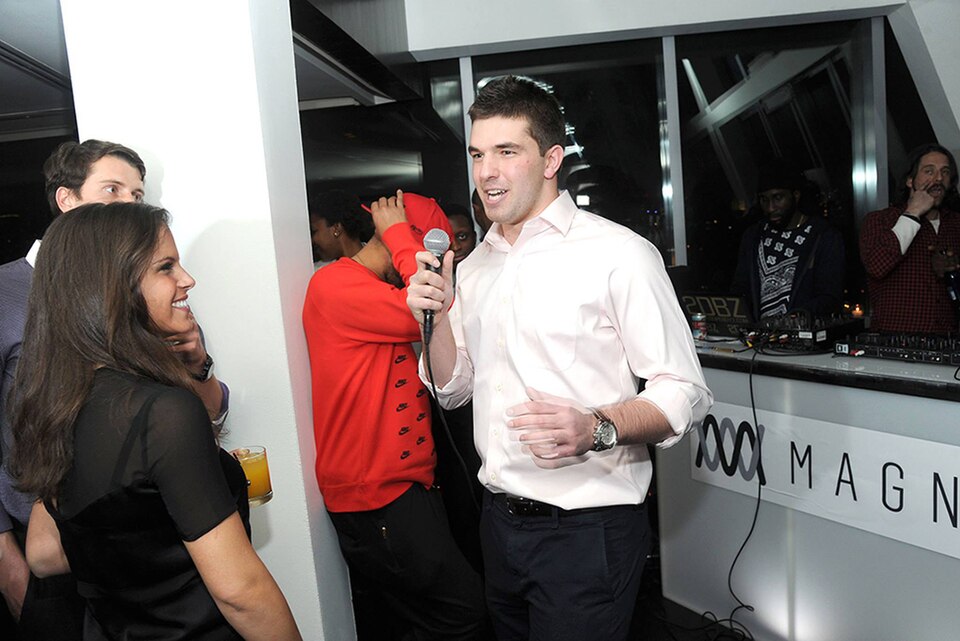
Image Source: Ian Moran (I to Z Photo + Video), CC BY-SA 3.0, via Wikimedia Commons
What was the Accusation?
Billy McFarland, founder and CEO of Fyre Media, became the central figure in the collapse of the 2017 Fyre Festival, a heavily promoted luxury music festival scheduled for two weekends in the Bahamas. Nearly 5,000 people bought tickets after advertising and social-media promotions promised high-end accommodations, celebrity-chef meals, music performances, and an exclusive island experience. When guests began arriving in April 2017, they instead encountered unfinished infrastructure, disaster-relief tents, inadequate food, logistical problems, and canceled performances. Organizers called off the event after attendees had already reached the island.
The controversy developed into a federal fraud case. According to the U.S. Attorney’s Office for the Southern District of New York, McFarland repeatedly misrepresented Fyre Media’s finances to investors, including its revenue, assets, receivables, and financial condition. Prosecutors said he also falsely represented the availability of festival cancellation insurance and used deceptive materials to secure investments. McFarland pleaded guilty in 2018 to wire-fraud charges involving Fyre Media, Fyre Festival LLC, and a ticket vendor. While awaiting sentencing, he also operated NYC VIP Access, which prosecutors described as a fraudulent ticket-selling operation involving events for which the company did not possess the promised tickets. He ultimately received a six-year federal prison sentence.
After serving almost four years, McFarland gave his first major post-prison television interview to Good Morning America on November 4, 2022. He acknowledged lying to obtain money, said he had violated the trust of employees, investors, friends, and others, and directly apologized for his conduct. He attributed his decision-making partly to insecurity and an intense desire to succeed, while acknowledging that he had been wrong. He also said that rebuilding trust would require proceeding more slowly and managing future projects differently.
Key Apologia Strategies:
Mortification, Corrective Action, Defeasibility
Video
N/A
Transcript
Billy McFarland — Good Morning America Interview Excerpts (November 4, 2022):
“I need to apologize. And that is the first and the last thing that needs to be done. I let people down. I let down employees. I let down their families. I let down investors. So I need to apologize. I’m wrong and it’s bad.”
“I was wrong. I messed up. And I was so driven by this desperate desire to prove people right … I think I was just so insecure that I thought the only way to prove myself to them was to succeed. That led me down just this terrible path of bad decisions.”
“I started lying to get the money and I would literally wake up every day to a document that we called, ‘Urgent Payment Sheet.’ And it had an amount of money that I had to acquire before the bank closed that day to stop the company from going underwater. So I was literally day-by-day doing whatever it took. And looking back, it was so incredibly stupid.”
“I think the hardest thing for me is the trust that I violated and whether it was friends, investors, or employees, people gave up a lot to try to make this happen. How do I call them now and look them in the eye when I let them down?”
“I went way too fast before. So I need to do everything now in a manageable way that I can actually make work. I hope I continue to change for the next 40 years. So I’m certainly not done changing yet.”