Ford Motor Company / Bridgestone-Firestone
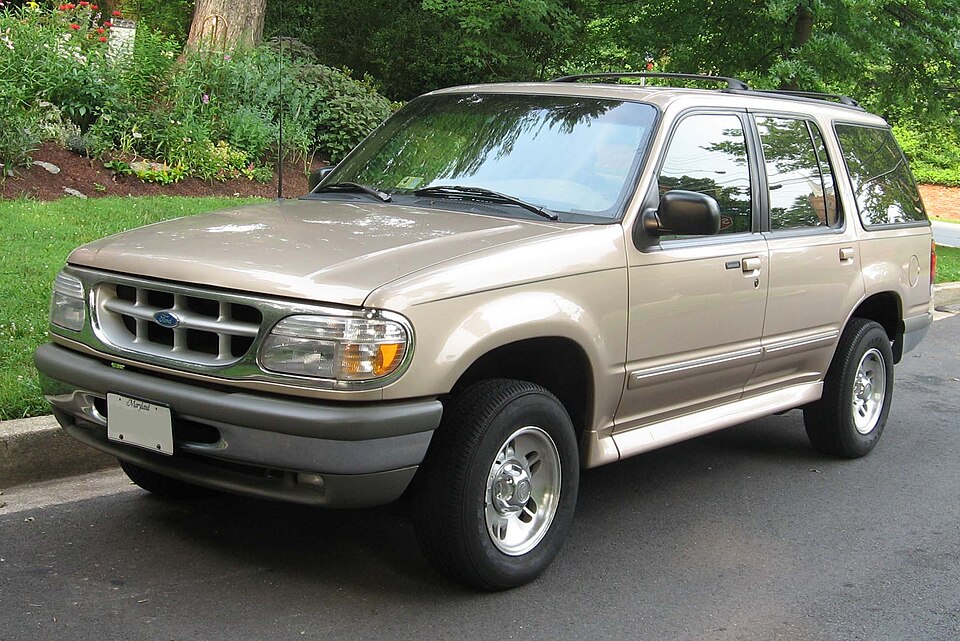
Image Source: IFCAR, Public domain, via Wikimedia Commons
What Was the Accusation?
Ford Motor Company and Bridgestone/Firestone faced a major product-safety crisis in 2000 after reports connected tread separations involving Firestone ATX, ATX II and Wilderness AT tires with crashes and rollovers, many involving Ford Explorers. The National Highway Traffic Safety Administration opened an investigation on May 2, 2000. On August 9, Firestone announced a recall covering approximately 14.4 million P235/75R15 tires, with the company estimating that about 6.5 million remained in service in the United States. At a September 12 Senate Commerce Committee hearing, lawmakers said the crisis had already been associated with 88 deaths and hundreds of injuries and questioned why warning signs had not produced action sooner.
The controversy focused not only on the tire failures but also on what Ford and Firestone knew, when they knew it, and whether each company had responded adequately to reports from the United States and overseas. Consumer advocates argued that both companies had received warning signs before the U.S. recall. Firestone acknowledged that it had failed to recognize the significance of its own claims data, while Ford maintained that it did not have access to Firestone’s confidential tire-claims data until July 2000 and insisted that the crisis was a tire problem rather than a defect in the Explorer.
At the Senate hearing, Bridgestone/Firestone CEO Masatoshi Ono expressed deep regret and accepted responsibility on the company’s behalf. Executive Vice President John Lampe said Firestone had made bad tires, accepted responsibility, and described recall, testing, transparency, and safety reforms. Ford CEO Jac Nasser emphasized Ford’s efforts to accelerate tire replacement, communicate with customers, disclose information to regulators, and create an early-warning system, while shifting primary responsibility for the defective tires to Firestone. The dispute between the companies continued, and in May 2001 Ford announced a broader replacement program for millions of additional Firestone Wilderness AT tires.
Key Apologia Strategies:
Mortification, Corrective Action, Denial, Shifting Responsibility, Defeasibility, Bolstering
Video
N/A
Transcript
Key excerpts from Masatoshi Ono and John Lampe’s testimony before the U.S. Senate Committee on Commerce, Science, and Transportation (September 12, 2000):
Masatoshi Ono: “As Chief Executive Officer, I come before you to express my deep regret and sympathy to you, the American people and especially to the families who have lost loved ones in these terrible rollover accidents. I also come to accept full and personal responsibility on behalf of Bridgestone/Firestone for the events that led to this hearing. Whenever people are hurt or fatally injured in automobile accidents, it is tragic. Whenever people are injured while riding on Firestone tires, it is cause for great concern among Bridgestone/Firestone’s management and our 35,000 American employees. We are committed to resolving this situation and regaining the trust of our customers.”
John Lampe: “Last month on August 9, our company announced a voluntary recall of over 14 million tires made over a 10-year period. We took this action out of concern for customer safety. We must and we do take full responsibility for the recalled tires and the things that we have done before August 9 and since.”
John Lampe: “We pledge to have open and transparent processes so that our customers, the Congress and the public can be confident that we have done the right thing now and will continue to do so in the future.”
John Lampe: “But at the same time, gentlemen, I recognize and we recognize there is a problem, a very complex problem that must be solved because lives are at stake. And for too long we did not see the problem.”
John Lampe: “We believed until recently that the accidents and claims reported were simply part of supplying a large number of vehicles like the SUVs and light trucks. Our feeling was that the large population and vehicle characteristics alone explained these accidents and that was wrong. Our own data ultimately demonstrated that.”
John Lampe, responding to Senator Olympia Snowe: “We have made some bad tires. And we take full responsibility for that.”
John Lampe: “Mistakes can be and are tragic. It is even more tragic not to learn by our mistakes and to prevent them from happening in the future.”
Key excerpts from Ford CEO Jac Nasser’s testimony before the U.S. Senate Committee on Commerce, Science, and Transportation (September 12, 2000):
Jac Nasser: “At Ford, we are very concerned that there are defective tires on some of our vehicles and we will not rest until every bad tire is replaced.”
Jac Nasser: “Ford Motor Company is absolutely committed to doing the right thing to protect our customers and to maintain their trust.”
Jac Nasser: “This is a tire issue, not a vehicle issue.”
Jac Nasser: “I want to emphasize that Ford did not know there was a defect with the tires until we received the confidential claims data from Firestone in July of this year.”
Jac Nasser: “As I said, our top priority is to replace faulty tires as fast as possible.”
Jac Nasser: “Our policy is to be as open as possible, sharing what we know, when we know it.”
Jac Nasser: “Last week I made a commitment to work with the industry to implement an ‘early warning system’ to detect the first signs of tire defects on vehicles already on the road. This system must utilize comprehensive real world data that–we now know–is so critical to spotting defect patterns. I also committed that Ford will advise U.S. safety authorities of safety actions taken in overseas markets and vice-versa.”
Jac Nasser: “This has been a difficult situation. Our first priority is to replace bad tires with good tires as quickly as possible. The safety, trust and peace of mind of our consumers are paramount to Ford Motor Company.”
The complete September 12, 2000 Senate hearing transcript, including the full prepared statements and questioning of Ono, Lampe, and Nasser, is available from the U.S. Government Publishing Office: https://www.govinfo.gov/content/pkg/CHRG-106shrg85219/html/CHRG-106shrg85219.htm
Sources
National Highway Traffic Safety Administration. (2001). Engineering analysis report and initial decision regarding Firestone Wilderness AT tires. U.S. Department of Transportation. https://www.nhtsa.gov/sites/nhtsa.gov/files/firestonereport.pdf
U.S. Senate Committee on Commerce, Science, and Transportation. (2000, September 12). Firestone tire recall: Hearing before the Committee on Commerce, Science, and Transportation, United States Senate, 106th Congress, 2nd session. U.S. Government Printing Office. https://www.govinfo.gov/app/details/CHRG-106shrg85219/CHRG-106shrg85219
Related Apologia Cases
Readers interested in this corporate apologia case may also want to review: