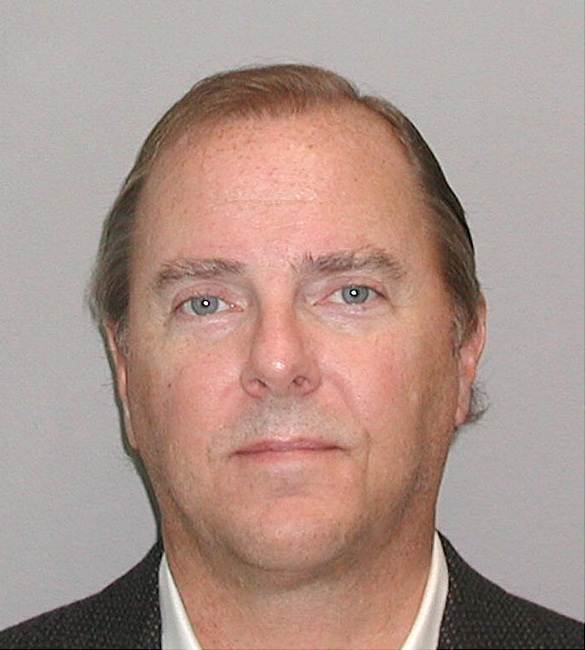
Image Source: United States Marshals Service, Public domain, via Wikimedia Commons
What was the Accusation?
Jeffrey Skilling, Enron Corporation’s former president and chief executive officer, became one of the central figures in public and congressional investigations following the energy company’s collapse in late 2001. Enron had grown into a major energy trading company while reporting strong earnings and presenting itself as an innovative corporate success. That image disintegrated as questions emerged about its accounting, off-balance-sheet partnerships, conflicts of interest, hidden debt, and the accuracy of information provided to investors. Enron filed for bankruptcy protection in December 2001, leaving thousands of employees and shareholders facing major financial losses and prompting investigations by Congress, the Securities and Exchange Commission, the Justice Department, and other federal authorities.
Skilling had served as Enron’s president and chief operating officer before becoming chief executive officer in February 2001. He resigned on August 14, 2001, approximately six months after taking the position. As investigators examined how Enron had represented its financial condition, questions focused on what Skilling knew about special-purpose entities and partnerships associated with Chief Financial Officer Andrew Fastow, whether those arrangements concealed liabilities or losses, and whether senior executives had misled investors about the company’s financial health. The February 2002 report prepared by a special committee of Enron’s board, commonly known as the Powers Report, also raised questions about management oversight, conflicts of interest, and transactions involving the LJM partnerships and other entities.
On February 7, 2002, Skilling appeared under oath before the House Subcommittee on Oversight and Investigations. He acknowledged the enormous human and financial consequences of Enron’s collapse and told lawmakers that he was devastated by and apologetic about what the company had come to represent. He also said that no words could make things right because too many people had been hurt. However, Skilling simultaneously denied knowing about inappropriate financing arrangements intended to conceal liabilities or overstate earnings. He maintained that, as far as he knew, Enron’s financial statements accurately reflected the company’s condition and argued that Enron failed because of a liquidity crisis caused by a loss of confidence rather than because it had been insolvent when he left.
Skilling also denied that he had sold Enron stock because he knew or suspected that the company was in financial trouble. Regarding the LJM partnerships, he said that he believed adequate controls existed to manage the conflict created by Fastow’s dual roles. Skilling further denied knowing that a restructuring of certain hedging transactions had been designed to conceal investment losses or that he had withheld information from Enron’s board. His testimony therefore combined regret about the consequences and reputation of Enron’s collapse with repeated denials of personal knowledge of the misconduct being investigated.
Other testimony and subsequent legal proceedings challenged important parts of that defense. At the same congressional hearing, Enron executive Jeffrey McMahon testified about concerns involving conflicts of interest connected to the partnerships and his discussions with Skilling. Federal prosecutors later charged Skilling in connection with a broader scheme to deceive investors and others about Enron’s financial performance. In May 2006, a federal jury convicted Skilling on 19 of the 28 counts then pending against him: conspiracy, 12 counts of securities fraud, one count of insider trading, and five counts of making false statements to auditors. He was initially sentenced to more than 24 years in prison and, following years of appellate proceedings, was resentenced in 2013 to 168 months. The later criminal verdict distinguishes the established legal record from the denial of wrongdoing Skilling presented during his 2002 congressional image-repair effort.
Key Apologia Strategies:
Denial, Defeasibility, Bolstering
Video
N/A
Transcript
Jeffrey Skilling Opening Statement Before the House Subcommittee on Oversight and Investigations (February 7, 2002):
TESTIMONY OF JEFFREY K. SKILLING, FORMER PRESIDENT AND CEO, ENRON CORPORATION; ROBERT K. JAEDICKE, ENRON BOARD OF DIRECTORS, CHAIRMAN OF AUDIT AND COMPLIANCE COMMITTEE, ENRON CORPORATION; AND HERBERT S. WINOKUR, JR., BOARD OF DIRECTORS, CHAIRMAN OF THE FINANCE COMMITTEE, ENRON CORPORATION
Mr. Skilling. Thank you, Chairman Greenwood and members of the committee. My name is Jeff Skilling. I worked for Enron for over 10 years, leaving in August of 2001 after being CEO of the company for 6 months.
During my time at Enron, I was immensely proud of what we accomplished. We believed that we were changing an industry, creating jobs, helping to resuscitate an ailing energy industry, and, by bringing choice to a monopoly dominated industry, we were trying to save consumers and small businesses billions of dollars each year. We believed fiercely in what we were doing.
But today, after thousands of people have lost jobs, thousands of people have lost money, and, most tragically, my best friend has taken his own life, it all looks very different. As proud as I was of what we tried to accomplish at Enron, as I sit here today I am devastated by and apologetic about what Enron has come to represent.
I know that no words can make things right. Too many people have been hurt too much. I am here today because I think Enron’s employees, shareholders, and the public at large have the right to know what happened. I have done all I can to help this investigation. I have testified for 2 days at the Securities and Exchange Commission. I have spoken on three occasions to the Special Committee of the Board and have spoken to the committee of this staff as well.
I have not exercised my rights to refuse to answer a single question, not one, and I don’t intent to start now. So let me talk about Enron and its demise.
First, contrary to the refrain in the press, while I was at Enron I was not aware of any financing arrangements designed to conceal liabilities or inflate profitability. The off balance sheet entities or SPEs that have gotten so much attention are commonplace in corporate America, and if properly established they can effectively shift risk from the company shareholders to others who have a different risk/reward preference. As a result, the financial statements issued by Enron, as far as I knew, accurately reflected the financial condition of the company.
Second, it is my belief that Enron’s failure was due to a classic run on the bank–a liquidity crisis spurred by a lack of confidence in the company. At the time of Enron’s collapse, the company was solvent, and the company was highly profitable, but apparently not liquid enough. That is my view of the principal cause of the failure. Now let me address some of the questions about my specific involvement in these events. First, I left Enron on August 14, 2001, for personal reasons. At the time I left the company, I fervently believed that Enron would continue to be successful in the future. I did not believe the company was in any imminent financial peril. Second, similarly, I did not dump any stock in Enron because I knew or even suspected that the company was in financial trouble. In fact, I left Enron holding about the same number of shares that I held at the beginning of 2001. On January 1, 2001, the start of my final year at Enron, I owned approximately 1.1 million shares of Enron stock. On August 14, the day I left, I owned about 940,000 shares of Enron stock. Indeed, in June of that year, I terminated an SEC sanctioned stock sell plan and elected to hold more Enron shares.
Third, with regard to the so-called LJM Partnerships, the Powers report criticizes me for supposedly not taking a more active role in reviewing the conflict of interest arising from the involvement in those partnerships of Enron’s then CFO. I believed at that time there were adequate controls in place to manage that conflict of interest, that the controls were being complied with, and that I was discharging, to the full extent of my mandate, my obligations to the Board with respect to that process.
Fourth and finally, the Powers report also criticizes me for supposedly approving the restructuring of certain hedging transactions. The report then suggests that, “If the account of other Enron employees is accurate, that transaction was designed to conceal losses on some of Enron’s investments,” and that I personally may have withheld information from the Board about that restructuring. I can state here today that I did not have any knowledge that the transaction was designated to conceal losses, and I did not do anything to withhold information from the Board of Directors of Enron Corporation. Ours was a company that emphasized creativity but always in a manner that relied on the advice of the best people we could find, both those inside the company and the lawyers and accountants outside the company who advised us. With that, Mr. Chairman, I am prepared to answer any questions that you may have.
U.S. House of Representatives, Committee on Energy and Commerce, Subcommittee on Oversight and Investigations. (2002, February 7). The financial collapse of Enron—Part 2: Hearing before the Subcommittee on Oversight and Investigations of the Committee on Energy and Commerce, House of Representatives, 107th Congress, 2nd session. U.S. Government Publishing Office. https://www.govinfo.gov/content/pkg/CHRG-107hhrg77987/html/CHRG-107hhrg77987.htm
Related Apologia Cases
Readers interested in this corporate apologia case may also want to review: