Scott Waddle
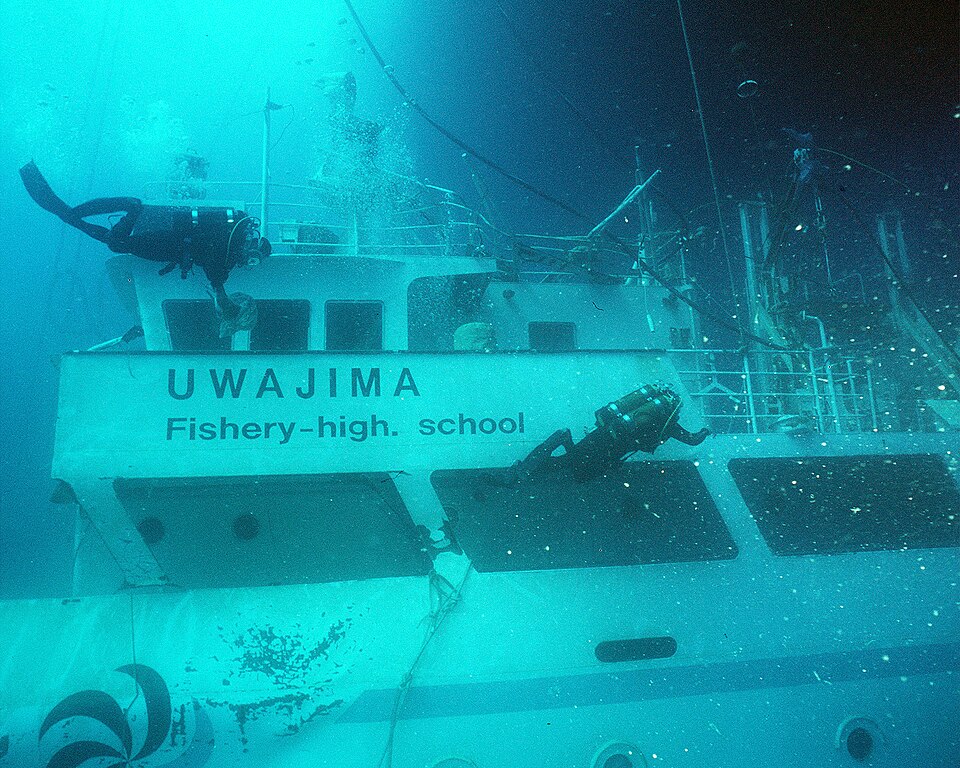
Image Source: U.S. Navy Photo by Chief Photographer’s Mate Andrew McKaskle. (RELEASED), Public domain, via Wikimedia Commons
What Was the Accusation?
U.S. Navy Commander Scott Waddle faced international criticism after the nuclear-powered attack submarine USS Greeneville collided with and sank the Japanese fisheries training vessel Ehime Maru off Oahu, Hawaii, on February 9, 2001. Waddle was the commanding officer of the Greeneville, which was carrying 16 civilian visitors as part of the Navy’s Distinguished Visitor program. Approximately nine nautical miles south of Oahu, the submarine performed an emergency main ballast tank blow, a rapid surfacing maneuver being demonstrated for the visitors. During the maneuver, the Greeneville surfaced beneath the Ehime Maru and struck its hull. The Japanese vessel sank within minutes.
Thirty-five people were aboard the Ehime Maru. Twenty-six survived, while nine died: four students from Uwajima Fisheries High School, two instructors, and three crew members. The accident immediately became a sensitive international issue between the United States and Japan, in part because the victims included teenage students and because civilian guests were aboard the submarine during the demonstration. The Navy and other U.S. officials issued apologies, while victims’ relatives and Japanese officials pressed for an explanation of how the collision had occurred and for a personal apology from the submarine’s commanding officer.
Waddle’s first public statement, released through his attorney on February 25, expressed his “most sincere regret” to the Japanese people and the families of those lost and injured. The wording drew criticism because it stopped short of explicitly saying that he apologized. Contemporary reporting from Japan described frustration among relatives who wanted Waddle to address them personally. Two days later, Waddle personally delivered letters of apology to a Japanese government representative in Honolulu for transmission to victims’ families and others, repeatedly saying that he was sorry.
During the Navy Court of Inquiry in March 2001, Waddle publicly accepted responsibility as commanding officer and apologized directly in the presence of victims’ relatives. The court investigated the conduct of Waddle and other members of the Greeneville crew. After reviewing the inquiry, Pacific Fleet commander Admiral Thomas Fargo found that Waddle had been derelict in the performance of his duties and had hazarded the submarine. Waddle received nonjudicial punishment and a punitive letter of reprimand, was removed from command for cause, and subsequently retired from the Navy.
The National Transportation Safety Board conducted a separate investigation and later determined that the probable cause of the collision was inadequate interaction and communication among senior members of the submarine’s combat systems team, resulting in inadequate contact analysis and failures to follow proper procedures before going to periscope depth, together with Waddle’s decision to order the emergency surfacing maneuver. The NTSB also found that inadequate management of the civilian visitors contributed to the accident because their presence impeded operations. The rapid flooding of the Ehime Maru after the submarine’s rudder tore through its lower deck spaces contributed to the loss of life.
Waddle continued attempting to address the accident after leaving the Navy. In December 2002, he traveled to Japan, visited the memorial at Uwajima Fisheries High School, bowed before it, and met with survivors and members of some victims’ families to apologize personally. Some relatives accepted his effort, while others declined to meet with him or believed the visit had come too late.
On February 9, 2021, exactly 20 years after the collision, Waddle issued an eight-page open letter addressed to the families of the nine people who died, the captain and crew of the Ehime Maru, and the students and staff of Uwajima Fisheries High School. He explicitly apologized, described the collision as avoidable, and accepted responsibility for failing in his duties as commanding officer. He also revisited the controversy surrounding his original use of the word “regret,” explaining that his first public statement had been drafted with assistance from attorneys and acknowledging that the wording had increased the anger surrounding his response.
Waddle wrote that he had spent the two decades since the accident discussing the collision and his leadership failures with military, professional, educational, and other audiences. He pointed to changes in Navy training and collision-prevention practices and described his continuing public discussion of the accident as an effort to fulfill requests from victims’ relatives that he tell the truth about what happened and help prevent a similar tragedy. The 2021 letter therefore served not only as another apology but as Waddle’s retrospective account of responsibility, remorse, prevention, and the inadequacies of his initial response to the disaster.
Key Apologia Strategies:
Mortification, Corrective Action, Bolstering, Defeasibility
Video
N/A
Transcript
Scott Waddle’s Initial Public Statement (February 25, 2001):
It is with a heavy heart that I express my most sincere regret to the Japanese people and most importantly, to the families of those lost and injured in the collision between the USS Greeneville and the Ehime Maru. I know that the accident has caused unimaginable grief to the families of the Ehime Maru’s missing students, instructors and crew members, to the Uwajima Fisheries High School, to Ehime Maru Captain Hisao Onishi, to the Uwajima city communities, and to all of the Japanese people. No words can adequately express my condolences and concern for those who have lost their loved ones. I too grieve for the families and the catastrophic losses that the families have endured.
The investigation that is about to begin at Pearl Harbor hopefully will resolve the questions and uncertainties surrounding this tragedy. It is my most sincere desire to determine the truth about what happened so that such a disastrous accident never again occurs. Such actions must be taken to preserve the honor of those who lost their lives, the honor of their families, my family’s honor, the honor of the Greeneville crew and the honor of our two nations.
Scott Waddle’s Court of Inquiry Testimony (March 20, 2001) — Excerpts:
“As commanding officer, I am solely responsible for this truly tragic accident, and for the rest of my life I will live with the horrible consequences of my decisions,”
“I am truly sorry for the loss of life and the incalculable grief those losses caused the honourable families of those lost at sea.”
Scott Waddle’s Open Letter to the Families (February 9, 2021):
Dear all,
Today marks the 20th anniversary of the collision between the USS GREENEVILLE (SSN772) and the Uwa jima Fisheries High School training vessel EHIME MARU. On February 9th, 2001 at approximately 1:43 PM local Hawaiian time the submarine I commanded performed a (training) emergency surface maneuver, collided with the EHIME MARU from underneath, and sank the vessel within 10minutes. The collision caused the loss of life of nine and injured nine (students and crew members). The EHIME MARU would sink to an ocean depth of 2,000feet resting upright and intact. The EHIME MARU took with her four students, two instructors, and three crewmen. Of those that perished that afternoon the bodies of eight of nine would be recovered months later. The body of Takeshi Mizuguchi would remain lost at sea.
The purpose of this letter is to first and foremost apologize to the families who lost loved ones, apologize to those aboard the EHIME MARU who were injured, apologize to Captain Hisao Onishi and his crew and apologize to the five students who were classmates of those who perished.Secondly, I wanted to make it clear that as the former captain of the USS GREENEVILLE (SSN772) I alone am solely responsible for the accident. The collision was avoidable and I failed in my duties as the captain to prevent it. Let me make it clear, at no time, is this letter intended to solicit empathy or sympathy from the reader. The families of those that died and the survivors of the accident warrant that and not me.
Though I am an American citizen I want you to know I was born in Misawa, Japan May 20, 1959, at Misawa Air Force base. I am proud of the fact I was born in Japan. The morning I was delivered the air that filled my lungs was from my birth country. I was cared for by Tama, a Japanese friend of our family who lived next door to us in Misawa. My first spoken words were Japanese. At the age of 27,I would climb mount FUJI and marvel at the splendor of the country where I was born. The day nine Japanese mariners on the EHIME MARU died, part of me died with them. I felt I had betrayed those that died and their families. I have carried the shame, sorrow, burden, and remorse every day since then and will do so until the day I die.
Know that my crew and I were not able to rescue survivors due to the rough seas that washed over the deck of my submarine along with the diesel fuel that floated on the ocean surface from the EHIME MARUs ruptured fuel tanks. From the bridge of my submarine, I decided not to help to avoid jeopardizing the safety of the survivors and that of my crew. An hour after the US Coast Guard rescued the survivors, I would learn 9 people had perished. Hearing that report was the most devastating thing I have ever experienced. When my submarine returned to port at the Pearl Harbor Naval Submarine base the next morning, Saturday morning 10 February 2001, I learned from my wife and 13-year-old daughter that four 17-year-old students, two instructors, and three crewmen had died. It was a moment the gravity of the situation hit me. Fired from my job Saturday afternoon I would go home to my family. I did not know what to do. I knew nine families were traumatized and grieving having been told the news of their loved ones. On the afternoon of 10 February, I was fired as the captain. I returned to theUSS GREENEVILLE and spoke to my crew one last time. I told my shipmates we owed it to the family members to find out why this terrible accident happened. I asked my men when the investigation begins to tell the truth and answer every question to the best of their ability. I asked them to not embellish their story and to say,
“I don’t know” if they were unsure of an answer.
Families arrived in Honolulu on Sunday the 11th. I called the CommanderSubmarine Pacific Public Affairs officer (PAO) and asked him to request from the Commander in Chief Pacific Fleet PAO that I be afforded the chance to meet with the family members face-to-face to offer an apology. An hour later I was told my request had been denied and that I was the last person the families would want to see. I should have tried harder to make my case to visit the families but did not. I knew the importance of giving those you offend or harm a sincere and prompt apology.
I am truly sorry I did not try harder.
The first apology I gave was via a press release drafted by my Navy and civilian attorneys. I questioned the word “regret” instead of “apologize” that was
used in the release. I was counseled this was the best word to use. In my heart, I knew it was wrong. In the end, I made another mistake by not saying, “I apologize and am sorry.” This action caused more anger and emotional distress to the victims’ families.
After weeks of search and rescue efforts failed to locate the missing, the families returned to Japan to await the Court of Inquiry (COI). I contacted the Japanese Consulate and requested a meeting with the Consulate General. Wearing a civilian suit and not my military uniform I chose to go as Scott Waddle and not a military officer. I was greeted by Consulate General’s staff. The Consulate General and I shared tea and talked about my childhood in Japan. After tea, I rose from my chair, stood before the Consulate General, bowed deeply, offered the letters (each addressed to the nine families, sealed by wax and bound with ribbon), and apologized for the harm I had caused. I told the Consulate General the accident had greatly embarrassed and brought shame to The United States of America, the United States Navy, the United States Submarine Force, the City of Greeneville, Tennessee, my crew, and myself. When I departed the Japanese consulate, the Consulate General and his staff returned my salute and bowed as a gesture of great honor and respect. That evening the letters flew to Japan on a Japan Airline flight.
The first week in March the first group of family members would return to Honolulu, Hawaii to witness the court of inquiry. The morning of 7 March, the third day of the Court of Inquiry (COI) I entered the courtroom and saw family members seated behind a railing that had separated me and members of the court. I nodded to one of the family members in an attempt to acknowledge their presence and to say nonverbally that I was sorry. Lynn Matsuoka, a court artist, saw this and immediately approached me to caution me and let me know that I had made a grave mistake. Lynn told me I needed to apologize to the families before I could speak with them. I asked Lynn to help me arrange for a meeting with the families to allow me the opportunity to apologize the correct way. Friday afternoon 9 March I met with families for the first time. I bowed before them and apologized communicating with the assistance of an interpreter. I listened to them and answered questions. I made the promise I would testify without immunity. I owed the families the truth and I knew it was the right thing to do. At the end of our meeting, Mrs. Naoko Nakata, the widow of Jun Nakata, gave me a personal letter. The contents of the letter were made public in the local newspapers that afternoon. On March 14th I would have the opportunity to meet the second group of families that attended the COI. I would apologize, listen to them and answer questions. The families asked me to testify. I assured them that I would and I did.
The COI would identify mistakes and errors that were made which resulted in the tragic loss of life. Members of my crew had taken the stand and testified before the court. My shipmates told the truth which made me proud. I knew the honorable and right thing to do was to take the stand and do whatI had asked my shipmates to do. The families would hear from me as promised. I will respond to parts of Mrs. Naoko Nakata’s letter to me. Mrs. Nakata wrote: “Dear captain, I was meant to share every sadness and suffering with my husband. Your submarine sank him. You will share the burden of the accident. You said you will bring your sorrows to your grave. But my husband was sent to the grave without knowing what happened to him.”
I share the burden. My actions took your husband from you and your children. I am truly sorry. Mrs. Nakata wrote: “Don’t judge the demerits and the merits, and please explain why it happened. Figure out what you should have done and what you didn’t do. Please reveal the cause of the accident, make an effort to prevent it from happening again, and make proposals to that effect.” The COI was thorough and identified mistakes and errors that were made At the end of the day, it was my fault and mine alone. I am responsible and accountable for what happened and no one else.The United States Navy conducted a thorough review of the COI report and testimony. The past 20 years lessons from this accident have been taught throughout the Navy, all Navy warfare disciplines, submarine training schools, all phases of the submarine officer training, and at the United States Naval Academy. Onboard United States submarines, those responsible for the safe operation and navigation of submarines (officer and enlisted) review the details of the accident once a year and others incidents every 3 months in the Collision and Grounding seminars.
Mrs. Nakata wrote: “You being the highest-ranking officer of the submarine which took the lives of the nine should make these proposals. I feel strongly that you should, dear captain.” “You will leave the Navy and I think someday address the public. When you do, you should speak the truth. You should answer all the questions and give out all the facts without making any deals, and make sure there are clear changes to prevent another incident like this one.” I am confident I have fulfilled and will continue to carry out this request. For the past 20 years, I have shared the story of this accident and my failures/shortcomings to businesses and audiences around the globe.I have devoted my time and effort to help others understand how to mitigate risk in the workplace and at home. My students and audiences learn how to protect their coworkers and make smart decisions that protect employees, their businesses, and communities.I have worked with clients both in the United States and overseas. Many are members of Fortune 1000 companies, educators, law enforcement professionals, first responders, health care professionals, industry leaders, countless Army and Air Force Active Duty and Reserve Units, the United States Air Force Academy (3 annual leadership symposiums), the Merchant Marine Academy, and one Navy ROTC unit. The audiences have been as few as 3 and as large as 21,000 (collectively the Faith Hope Church Honolulu Hawaii in 2003). I am committed to sharing the story not for personal gain but in hopes to prevent accidents like this from happening again.The message to the recipients is clear. Mistakes and failures will happen. When they do, do what is right. Be accountable for your actions, tell the truth, atone to those you harm or hurt. Be a person of integrity, be accountable and responsible for all that you do.
Mrs. Nakata wrote: “I’d like to tell my son and daughter someday that daddy’s accident was a sad incident but that it made the Hawaiian ocean a safe place for all people around the world and ships like the Ehime Maru to come to Hawai’i. He taught us that safety and security are very important. We’ll go to Hawai’i someday, the three of us.” Today Mrs. Nakata’s children are adults. Her son should be 25, perhaps with a family of his own. Her daughter should be 20. I think about the children often and hope they knew their father is a HERO. Kazuo Nakata the father of Jun Nakata told a story about his son to areporter. Before Jun Nakata departed for his fifth voyage, he told his father Kazuo, “If something happens to the ship, Dad, I would let all the students go first. I would never escape before the students.” Kazuo responded to his son. “It depends on the circumstances. Say you were rescued and the students weren’t — I don’t think you would be blamed for that.” When Kazuo Nakata told this story, he was 55. Today he would be 75 years old. I hope he is alive today. His final comment to the reporter as he pulled out a green plaid handkerchief, as his eyes welled with tears, was to say “But the kid’s (Jun) not the kind to let the students not go before him.”
In closing, I leave you with Kazuo Nakata’s story in hopes the reader will remember and mourn the victims of this tragedy. Please pray for their families. Pray that the soul of Takeshi Mizuguchi will continue to protect mariners that sail on top of and below the surface of the Hawaiian waters and that his soul will rest in peace.
Sincerely and very respectfully,
Scott WaddleCommander USN (Retired)
Sources
Associated Press. (2001, February 28). Captain of sub sends apologies to victims’ kin. Los Angeles Times. https://www.latimes.com/archives/la-xpm-2001-mar-01-mn-31853-story.html
Associated Press. (2001, February 25). Greeneville commander expresses ‘sincere regret.’ The Washington Post. https://www.washingtonpost.com/archive/politics/2001/02/26/greeneville-commander-expresses-sincere-regret/5f7ababa-39c5-4f06-a57f-baae55c988c1/
Gilmore, G. (2001, April 24). Sub skipper reprimanded for Ehime Maru incident. American Forces Press Service / Defense Visual Information Distribution Service. https://www.dvidshub.net/news/526378/sub-skipper-reprimanded-ehime-maru-incident
Martinez, J. (2021, February 11). 20 years after Ehime Maru tragedy, former Navy commander apologizes in new letter. Hawaii News Now. https://www.hawaiinewsnow.com/2021/02/09/former-navy-commander-living-with-guilt-apologizes-deadly-tragedy-years-ago/
National Transportation Safety Board. (2005). Collision between the U.S. Navy submarine USS Greeneville and Japanese motor vessel Ehime Maru near Oahu, Hawaii, February 9, 2001 (Marine Accident Brief NTSB/MAB-05/01). https://www.ntsb.gov/investigations/AccidentReports/Reports/MAB0501.pdf
Perry, T. (2001, March 21). Sub captain testifies, says he was ‘solely responsible.’ Los Angeles Times. https://www.latimes.com/archives/la-xpm-2001-mar-21-mn-40616-story.html
Struck, D., & Yamamoto, A. (2002, December 15). Sub captain tries to heal wounds. The Washington Post. https://www.washingtonpost.com/archive/politics/2002/12/16/sub-captain-tries-to-heal-wounds/fb65a565-5681-4c49-b111-2794d8028351/
The Japan Times. (2002, December 19). A belated but welcome apology. https://www.japantimes.co.jp/opinion/2002/12/19/editorials/a-belated-but-welcome-apology/
Honolulu Star-Advertiser. (2021, February 8). Former USS Greeneville skipper writes open letter to families of crew members who perished in the sinking of Ehime Maru. https://www.staradvertiser.com/2021/02/08/breaking-news/former-uss-greeneville-skipper-writes-open-letter-to-families-of-crew-members-who-perished-in-the-sinking-of-ehime-maru/
Related Apologia Cases
Readers interested in this international apologia case may also want to review:
-
Richard Macke
-
George W. Bush – Abu Ghraib
-
United States Government – 2001 China Spy Plane Incident
-
Emperor Akihito