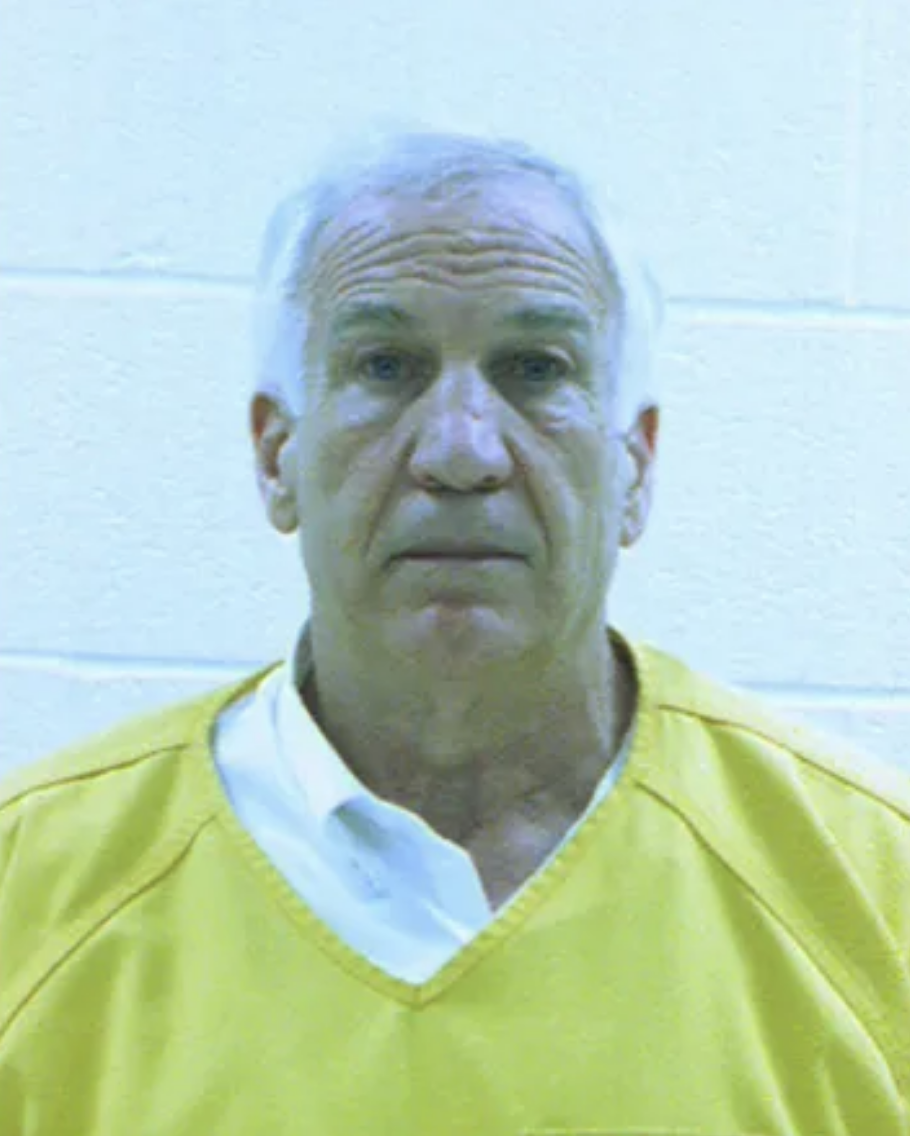
Jerry Sandusky, a longtime assistant football coach at Pennsylvania State University and founder of the youth organization The Second Mile, was accused of sexually abusing boys whom he had encountered through the charity and other contacts. Pennsylvania prosecutors charged Sandusky after a grand jury investigation examined allegations extending over many years. At trial in Centre County in June 2012, eight men testified about sexual abuse they said Sandusky committed against them when they were boys. The Pennsylvania Superior Court later summarized the case by stating that Sandusky met all eight victims through The Second Mile and that their testimony described abuse spanning from 1995 through 2008.
On June 22, 2012, a jury found Sandusky guilty on 45 of the 48 criminal counts submitted for deliberation. The convictions included offenses involving sexual contact with minors, corruption of minors, unlawful contact with minors, and endangering the welfare of children. Sandusky continued to deny that he had sexually abused the boys and pursued challenges to his conviction. His case also produced enormous consequences for Penn State because questions arose about how university officials had responded to earlier information concerning his conduct and whether opportunities to protect children had been missed.
On October 8, 2012, the evening before his sentencing, Sandusky released a recorded statement from jail through Penn State student radio. Rather than accepting responsibility for the crimes established by the jury verdict, he maintained his innocence and portrayed himself as the target of false accusations and a broader campaign involving accusers, investigators, the media, Penn State, psychologists, and attorneys. He questioned the motives of his accusers, invoked his marriage and family, emphasized his previous work with young people, and said he intended to continue fighting the case. The following day, Judge John Cleland sentenced Sandusky to a term that resulted in a minimum of 30 and a maximum of 60 years of imprisonment. Sandusky was resentenced in 2019 after an appellate ruling concerning sentencing procedure, but the court again imposed a 30-to-60-year term.
Key Apologia Strategies:
Denial, Attack the Accuser, Bolstering
Video
N/A
Transcript
Jerry Sandusky Pre-Sentencing Statement (Recorded October 8, 2012 from his jail cell in Bellefonte, Pennsylvania and aired on the Penn State student radio station):
I’m responding to the worst loss of my life.
First, I looked at myself. Over and over, I asked why? Why didn’t we have a fair opportunity to prepare for trial?
Why have so many people suffered as a result of false allegations? What’s the purpose? Maybe it will help others. Some vulnerable children who could be abused might not be because of all the publicity. That would be nice, but I’m not sure about it. I would cherish the opportunity to become a candle for others, as they have been a light for me.
They can take away my life, they can make me out as a monster, they can treat me as a monster, but they can’t take away my heart. In my heart, I know I did not do these alleged disgusting acts.
My wife has been my only sex partner, and that was after marriage. Our love continues.
A young man who was dramatic, a veteran accuser and always sought attention, started everything. He was joined by a well-orchestrated effort of the media, investigators, the system, Penn State, psychologists, civil attorneys and other accusers. They won.
I’ve wondered what they really won: attention, financial gain, prestige — will all be temporary.
Before you blame me, as others have, look at everything and everybody. Look at the preparation for the trial and the trial. Compare it to others. Think about what happened. Why, and who made it happen?
Evaluate the accusers and their families. Realize they didn’t come out of isolation. The accusers were products of many more people and experiences than me. Look at their confidants and their honesty. Think about how easy it was for them to turn on me given the information, attention and potential perks. I never labeled or put down them or their families. I tried and I cared, then asked for the same.
Please realize all came to the Second Mile because of issues. Some of those may remain.
We will continue to fight. We didn’t lose the proven facts, evidence, accurate locations and times. Anything can be said. We lost to speculation and stories that were influenced by people who wanted to convict me.
We must fight unfairness and consistency and dishonesty. People need to be portrayed for who they really are.
We’ve not been complainers. When we couldn’t have kids, we adopted. When we didn’t have time to prepare for a trial, we still gave it our best. We will fight for another chance.
We have given many second chances, and now we’ll ask for one. It will take more than our effort. Justice will have to be more than just a word, fairness more than just a dream. It will take others: somebody apolitical with the courage to listen, to think about the unfairness, to have the guts to stand up and take the road less traveled.
I ask for the strength to handle everything and willingness to surrender only to God, regardless of the outcome.