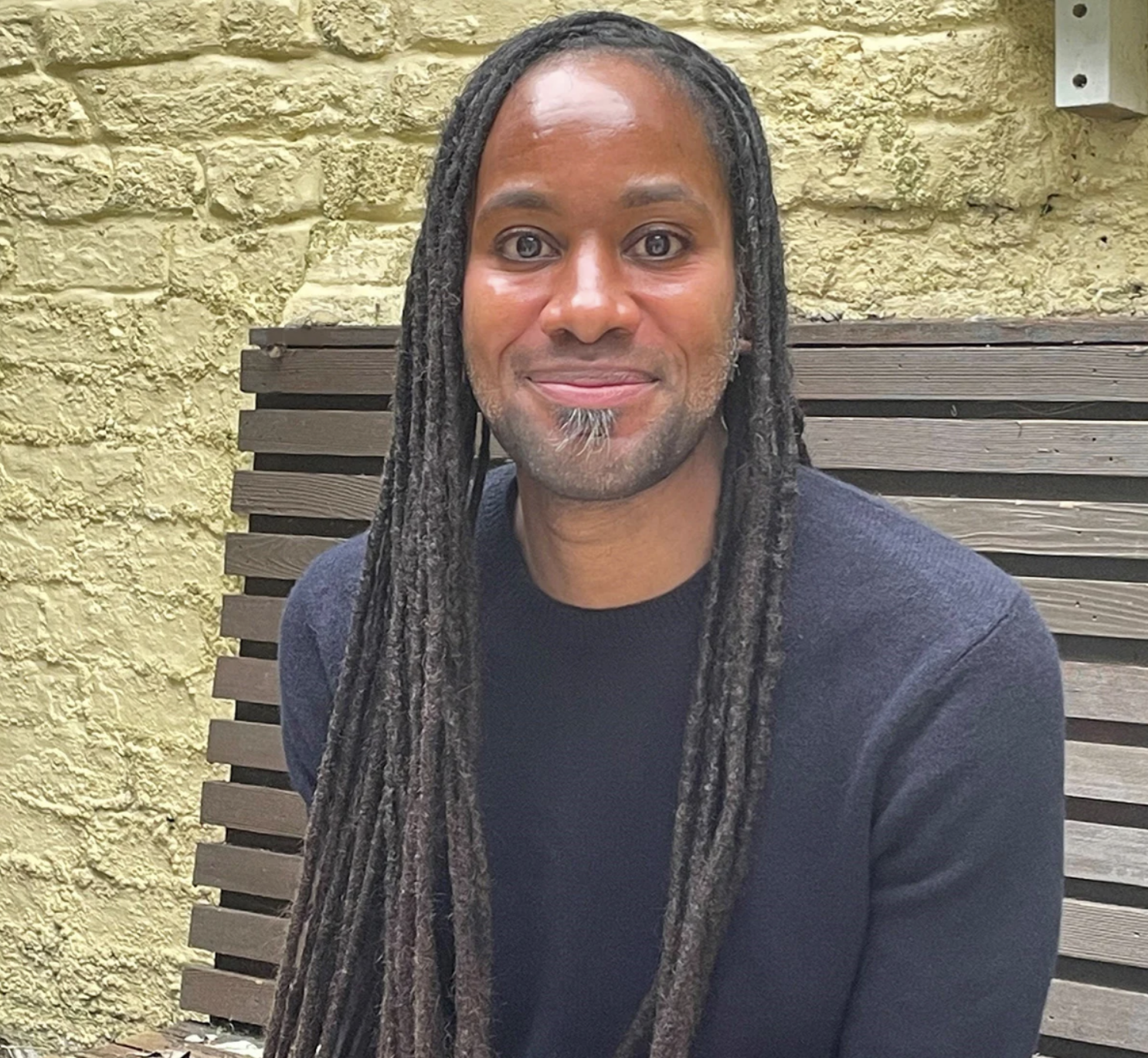
Image Source: University of Cambridge Faculty of Education / Jason Arday
What Was the Accusation?
Professor Jason Arday, a British sociologist who in 2023 became the youngest Black person appointed to a professorship at the University of Cambridge, faced intense scrutiny in July and August 2026 over allegations of plagiarism and other irregularities in his academic work. The controversy focused in part on his 2015 doctoral thesis from Liverpool John Moores University, where investigators and journalists identified passages that appeared identical or nearly identical to material in earlier academic work. Additional questions were raised about published research in which passages, research descriptions and quotations attributed to interview participants resembled material appearing in previously published studies.
The allegations were complicated by earlier institutional reviews. Liverpool John Moores University had previously investigated concerns involving Arday’s doctoral work and did not find academic misconduct, while Cambridge initially said that he had been cleared of plagiarism allegations and described him as the target of a campaign intended to undermine his credibility. At the same time, some of Arday’s published scholarship had already been corrected. Retraction Watch reported that a 2018 article was amended after concerns were raised about unattributed material and that portions describing the research methodology and participant quotations were also changed or removed. A second article was subsequently corrected for textual overlap with other publications.
Arday denied deliberately plagiarizing other scholars but acknowledged making mistakes in his earlier academic work. In a July 2026 interview, he said that he accepted accountability for those mistakes while arguing that the public response had become disproportionate and personally cruel. He attributed some problems in his early scholarship to inadequate academic supervision and to the way his autism affected how he absorbed and reproduced information. Arday also maintained that the campaign against him had become intertwined with hostility toward his work on race and inequality and with attacks directed at him as a Black and autistic academic.
The controversy expanded beyond plagiarism as journalists examined claims made about Arday’s personal history, professional qualifications, charitable fundraising and athletic achievements. Reports questioned accounts that he had raised millions of pounds for charity and completed extraordinary endurance-running challenges, among other claims. Arday disputed the portrayal of himself as dishonest and said some descriptions of his fundraising had failed to make clear that the money was raised collectively with other participants. The resulting dispute therefore involved two related but distinct questions: whether Arday’s scholarship met accepted standards of academic integrity and whether some elements of the inspirational public biography that accompanied his rise to prominence had been inaccurately or misleadingly presented.
On August 5, 2026, after Cambridge announced a new investigation prompted by additional information concerning his academic qualifications and honorary appointments, Arday resigned from both the University of Cambridge and Jesus College with immediate effect. In his resignation statement, he did not accept the allegations against him. Instead, he said the years following his appointment had brought an extraordinary level of scrutiny and personal attack and that the accumulated accusations, speculation and public commentary had taken a profound toll on him and those close to him. He described leaving Cambridge as the end of a chapter rather than an abandonment of scholarship and said he hoped eventually to return to his work.
Arday was found unresponsive at an address in Battersea, south London, on August 14, 2026, and was pronounced dead at age 41. Metropolitan Police said his death was unexpected, but was not believed to be suspicious and that a file would be prepared for the coroner. His family subsequently said he had endured a sustained campaign of abuse and harassment and asked the press to leave the family alone. His death intensified debate over both the substantive academic-integrity allegations and the scale, tone and racial dimensions of the public scrutiny surrounding them.
Key Apologia Strategies
Mortification, Attacking the Accuser, Bolstering, Corrective Action
Video
N/A
Transcript
Excerpts from Jason Arday’s response to the allegations, July 2026:
“I am accountable for the mistakes I’ve made. I hold myself accountable and other people should hold me accountable. We’re talking about academia here. I didn’t murder somebody. I think the cruelty that I’ve experienced, and the positioning of me as this kind of liar and fantasist, is totally unacceptable.”
Jason Arday’s resignation statement, August 5, 2026:
Dear colleagues,
It is with profound sadness that I write to resign, with immediate effect, from my position at the University of Cambridge and Jesus College.
When I accepted the extraordinary honour of becoming Professor of Sociology at Cambridge, it was, without question, the greatest professional privilege of my life. To become the youngest Black professor in the University’s history was something I could scarcely have imagined as a child growing up with a diagnosis of autism, unable to speak until I was eleven years old.
The response from so many people across the world was overwhelming. Thousands celebrated not simply my appointment, but what it represented: that talent, perseverance and hope can triumph over even the greatest adversity. It has been the privilege of my life to teach my students, to learn alongside them, and to witness their curiosity, kindness and ambition. They have given me far more than I could ever have given them.
Sadly, the years since my appointment have also been marked by an unrelenting level of public scrutiny and personal attack. While criticism is an inevitable part of academic life, what I have experienced has gone far beyond scholarly disagreement. The relentless accusations, speculation and public commentary have taken a profound toll on me and on those I love.
I have tried to continue because I believe deeply in the values of higher education, in rigorous scholarship, and in the transformative power of universities. I have tried because of my students, my colleagues and the countless people who have written to tell me that my journey gave them hope.
But there comes a point when the personal cost becomes too great.
I have a family. I want to be present for them. I want to reclaim some peace, some privacy and some semblance of an ordinary life. I no longer wish to feel as though I am living under a constant spotlight, where every aspect of my life is subject to public examination and judgement.
For my own wellbeing, for my family, and for those who have stood by me throughout this difficult period, I have concluded that the only way to bring this chapter to an end is to step away.
This decision should not be interpreted as a loss of faith in scholarship or in the values that first brought me to Cambridge. Nor should it be mistaken for an acceptance of the narratives that have surrounded me. It is simply the decision of someone who has reached the limits of what any person should reasonably be expected to endure.
To my students: thank you. Teaching you has been the greatest honour of my academic career. Your brilliance, compassion and determination give me enormous hope for the future.
To my colleagues and to the many thousands of people, from every corner of the world, who have supported me, defended me, written to me, and believed in me when it mattered most, I offer my deepest gratitude. Your kindness has carried me through some of the darkest moments of my life.
This is not the end of my work. It is simply the end of this chapter.
I need time to heal. I need time to simply be myself again.
And when that time comes, I will return.
I will return stronger, wiser and with the same determination that has always defined my journey. There is still so much work to do, and I look forward to doing it alongside so many of you in the years ahead.
For now, however, I ask only for understanding, for compassion, and for the space to begin again.