Jayson Blair
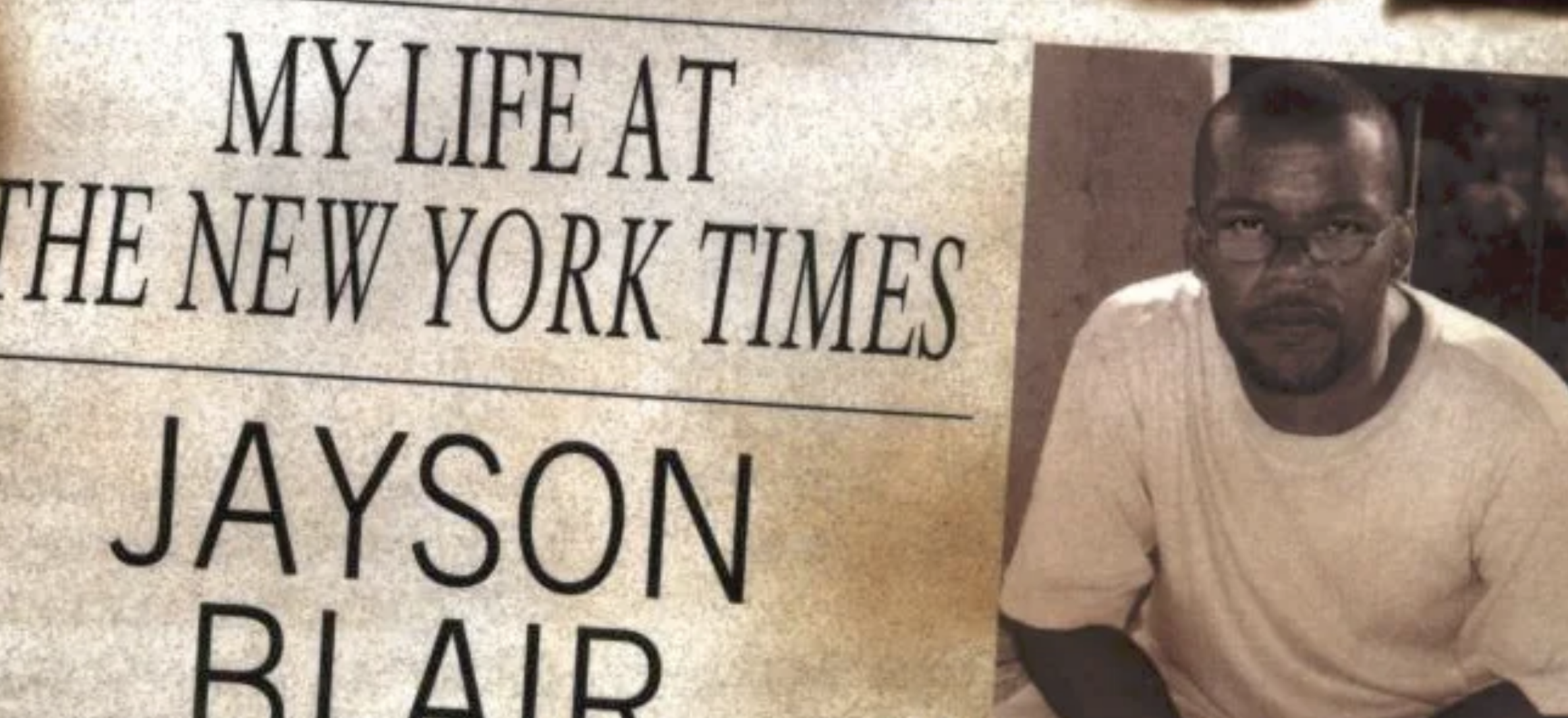
Image Source: https://www.plagiarismtoday.com/2013/05/01/looking-back-10-years-after-jayson-blair/
What Was the Accusation?
Jayson Blair became the subject of one of the most consequential journalism ethics scandals of the early 2000s after The New York Times discovered that he had repeatedly plagiarized and fabricated material while working as a reporter for the newspaper. The scandal emerged in late April 2003 after editors at the San Antonio Express-News raised concerns about similarities between an article Blair had written for the Times and earlier reporting by Express-News reporter Macarena Hernandez. Blair resigned from The New York Times on May 1, 2003. The newspaper then conducted an extensive investigation of his work and reported that at least 36 articles written since October 2002 contained plagiarism, fabricated information, misrepresentations about Blair’s whereabouts, or combinations of those problems.
Blair’s misconduct went substantially beyond copying another journalist’s words. His reporting included invented quotations and details, claims that he had interviewed people he had not interviewed, and datelines suggesting that he had traveled to locations where he had not actually been. Some of the compromised reporting concerned nationally important and emotionally sensitive stories, including the Washington-area sniper investigation and American military personnel and their families during the Iraq War. In its May 11, 2003 examination of the scandal, The New York Times described Blair’s conduct as a profound betrayal of trust and acknowledged failures within the newspaper that had allowed the deception to continue. The scandal also damaged the newspaper institutionally and became part of a wider debate about newsroom supervision, editing, journalistic verification, and accountability.
Blair subsequently discussed substance abuse and his diagnosis of bipolar disorder when describing the circumstances surrounding his misconduct, but in later appearances he explicitly rejected mental illness as an excuse. He instead attributed his actions in significant part to his own character flaws and arrogance. Thirteen years after the scandal, Blair returned to university journalism classrooms to discuss what he had done. On April 6, 2016, he appeared at the University of Maryland’s Philip Merrill College of Journalism, where he apologized for damaging journalism and for hurting people in his personal and professional life. On April 11, he spoke to students in Professor Bill Adair’s News as a Moral Battleground class at Duke University. Blair again accepted responsibility, described how crossing an ethical boundary made subsequent violations easier, and said he regretted betraying colleagues, worrying his family, and giving people who distrusted journalists additional reason to question the profession’s credibility. He also acknowledged that the loss of trust resulting from his misconduct meant that he could not reasonably expect to return to journalism.
Key Apologia Strategies:
Mortification, Defeasibility, Corrective Action
Video
N/A
Transcript
.jpg)