Wesley Snipes
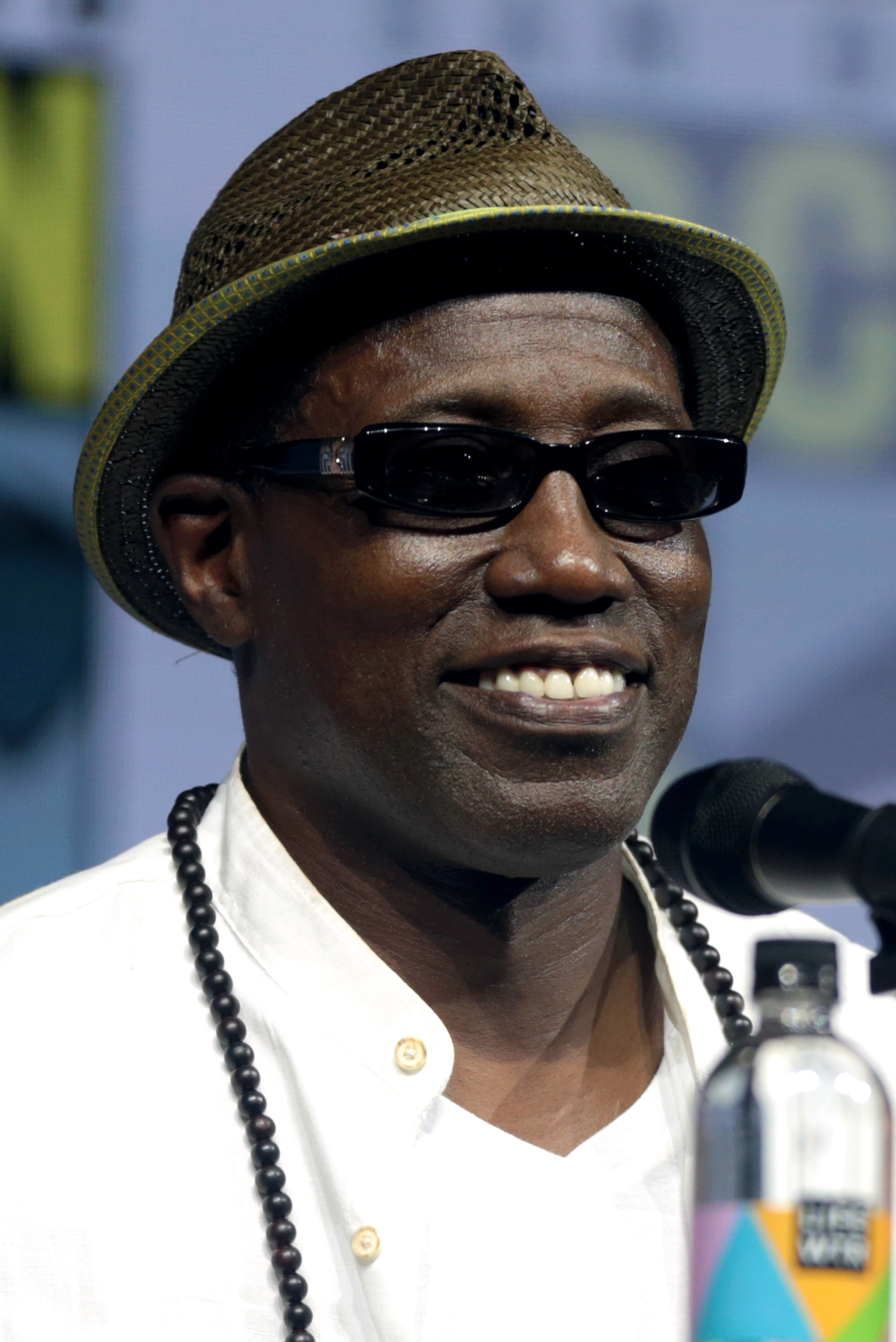
Image Source: Gage Skidmore, CC BY-SA 3.0, via Wikimedia Commons
What Was the Accusation?
Actor Wesley Snipes became the subject of a federal tax prosecution after the U.S. Department of Justice alleged that he had participated with tax advisers Eddie Ray Kahn and Douglas P. Rosile in efforts to challenge his federal income-tax obligations. An eight-count federal indictment unsealed on October 17, 2006, charged Snipes, Kahn, and Rosile with conspiracy to defraud the Internal Revenue Service and presenting a fraudulent claim for payment to the IRS. Prosecutors alleged that the defendants had prepared and filed amended returns seeking nearly $12 million in refunds for taxes Snipes had previously paid for 1996 and 1997. Snipes was also charged with six misdemeanor counts of willfully failing to file federal income-tax returns for 1999 through 2004. Because an indictment is an accusation rather than a finding of guilt, Snipes was presumed innocent of those charges while the case proceeded to trial.
The jury returned a mixed verdict on February 1, 2008. Snipes was acquitted of the felony conspiracy charge and the felony charge involving the allegedly fraudulent refund claim. He was also acquitted on three of the six failure-to-file counts. The jury convicted him, however, of three misdemeanor counts of willfully failing to file individual federal income-tax returns for 1999, 2000, and 2001. The U.S. Court of Appeals for the Eleventh Circuit later summarized the trial evidence as showing that Snipes had become involved with Kahn’s American Rights Litigators organization, which promoted arguments challenging the federal government’s authority to collect income taxes. The appellate court also noted that Snipes earned more than $37 million in gross income between 1999 and 2004 while failing to file individual federal income-tax returns during those years. His convictions therefore concerned willful failure to file returns, not the felony conspiracy and false-claim allegations of which he had been acquitted.
At sentencing on April 24, 2008, U.S. District Judge William Terrell Hodges imposed three consecutive one-year prison terms, the maximum incarceration permitted for Snipes’s three misdemeanor convictions, followed by one year of supervised release. Snipes read a prepared statement asking the court for mercy and apologizing for what he described as his mistakes and errors. Contemporary reporting also quoted him describing himself as an artist who was inexperienced in law and finance and as “well-intentioned, but miseducated.” The sentencing court nevertheless concluded that imprisonment was warranted. Snipes appealed, arguing among other things that errors had occurred involving venue, jury instructions, and sentencing. On July 16, 2010, the Eleventh Circuit affirmed his convictions and sentence in all respects. He began serving his sentence in December 2010 and was released from federal custody in 2013 after approximately two and a half years.
Snipes continued to maintain that aspects of his prosecution were unfair, particularly the government’s treatment of him alongside the advisers whose professional guidance he said he had relied upon. His later reflections, however, contained a more explicit acceptance of responsibility for his own decisions. In a November 2020 interview with The Guardian, subsequently reported by People, Snipes said that he did not view himself as an innocent bystander. He acknowledged that he had chosen his accountant and lawyer and had chosen whether to believe their advice. He also described incarceration as an experience that clarified his values, purpose, and appreciation for time spent with his family. Asked whether the experience had caused him to reassess his own conduct, Snipes acknowledged that it had. He further stated that he had obtained new accountants and was paying his taxes. His response across the two periods therefore moved from an apology framed partly around being poorly advised and financially unsophisticated toward a more direct acknowledgment of personal decision-making and an emphasis on lessons learned after incarceration.
Key Apologia Strategies:
Mortification, Bolstering, Shifting Blame, Corrective Action
Video
N/A
Transcript
Wesley Snipes Sentencing Statement (April 24, 2008):
“I asked this court to show me mercy and the opportunity to set things right. This will never happen again. I am very sorry for my mistakes or my errors.”
Excerpts from Wesley Snipes’ Interview with The Guardian (November 2, 2020):
Guardian: How do you think your conviction affected your career?
Snipes: “You’ll have to get that perspective from those in the business who were the gatekeepers. As far as the streets were concerned, it didn’t change their appreciation for my work and my artistry one bit. Not one bit.”
Guardian: Were you offered big roles after your release? “
Snipes: “Yeah, yeah. I’ve been offered some great roles. I haven’t done another project with Marvel, but working with Eddie Murphy was a phenomenal opportunity for me.”
Guardian: Why do you think Trump got away without paying taxes and you didn’t?
Snipes: “Well, that’s an easy answer. He’s the president of the United States. This is not rocket science. It’s not what you know, it’s who you know. The law says you pay for people who are experts to manage your business affairs, yet I was included as a co-conspirator with the lawyer and the accountants. Now this is rare. Very unusual situation.”
Guardian: Was it a miscarriage of justice?
Snipes: “Absolutely. Of course it was unfair.”
Guardian: What did you learn from the experience?
Snipes: “The biggest thing I got from it was learning the value of time and how we often squander it … I understand that very clearly now, having been away from my family and loved ones two and a half years.”
Guardian: Did it make you reassess yourself? Did he think he had been wrong and stupid?
Snipes: “All of the above. I don’t see myself as an innocent bystander in any of it. I made decisions. I accept the ramifications of those decisions. No one forced me to take that person as my accountant; no one forced me to take that person as my lawyer. No one forced me to believe what they were saying. That was on me. I don’t have time to sit back and say I was wronged and recapture all that was lost. I’ve gained so much more. I understand so much more. And if two and a half years of my life were in meditation and isolation up at that camp out of the 100 I plan on living, good deal. Goood deal!”
Guardian: Did you come out a better person?
Snipes: “I hope I came out a better person. I came out a clearer person. Clearer on my values, clearer on my purpose, clearer about my relationship with my ancestors and the great god and the great goddess above, and clearer on what I was going to do once I had my freedom back.”
Guardian: Do you think you had become greedy?
Snipes: “Greedy? I, errrrm, don’t think so. I didn’t focus on making money … You don’t see pictures of me wearing all the big chains and driving all the big fancy cars.”
Guardian: Do you pay all his taxes?
Snipes: “I pay all my taxes. I’ve got new accountants, yeah, absolutely.”
Sources
Related Apologia Cases
Readers interested in this celebrity apologia case may also want to review: