Adolf Sauerland
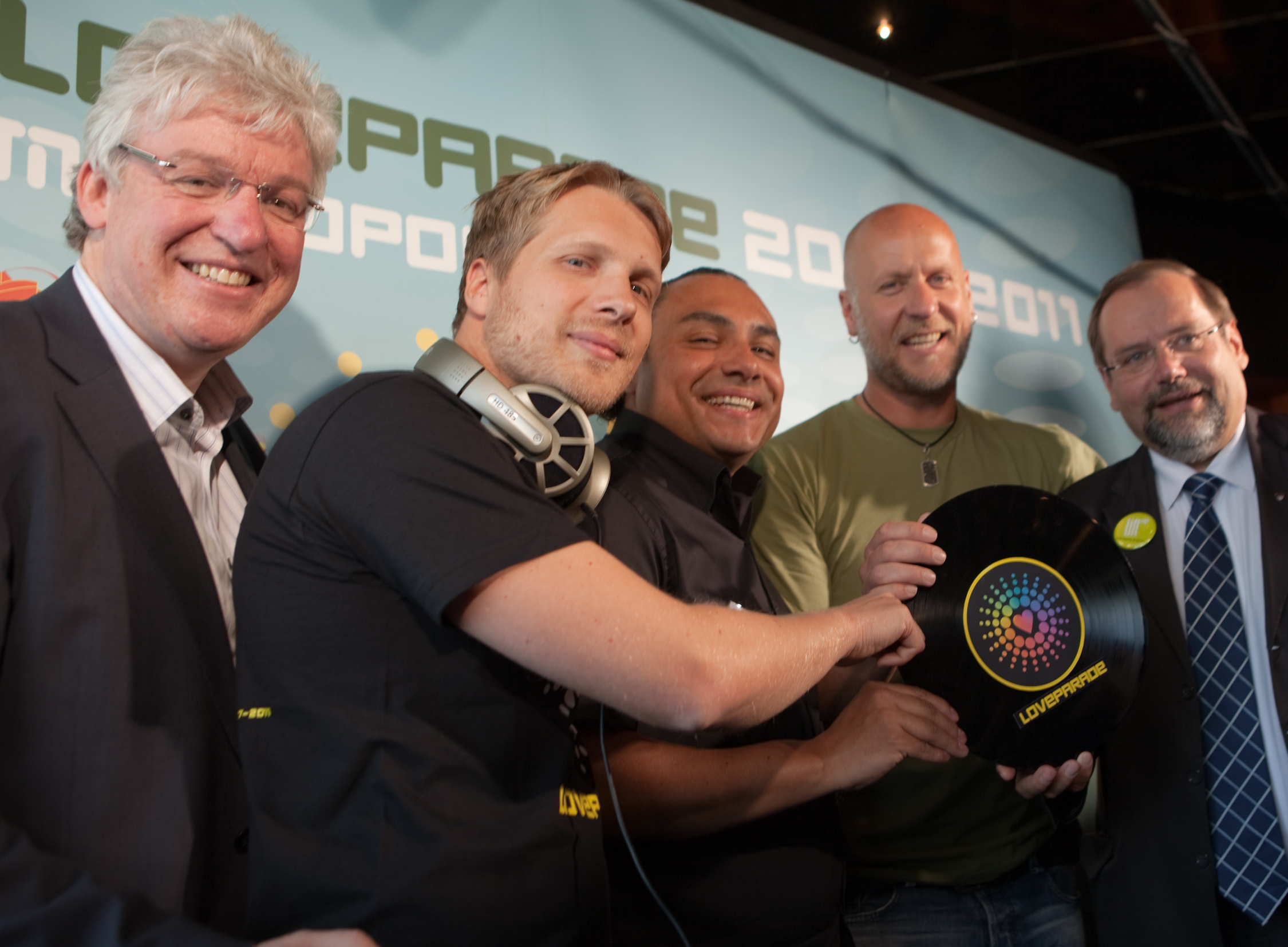
Image Source: Christoph Müller-Girod, CC BY 2.0, via Wikimedia Commons
What Was the Accusation?
Adolf Sauerland, then mayor of Duisburg, Germany, faced intense criticism after the Love Parade electronic music festival ended in a deadly crowd disaster on July 24, 2010. Twenty-one people were killed and more than 500 were injured as extremely dense crowds developed around the tunnel-and-ramp system serving the festival grounds at a former freight station. Subsequent research challenged descriptions of the tragedy as simply a panic or stampede and instead identified interacting failures in crowd-flow planning and control that produced dangerous crowd turbulence. Because the City of Duisburg had a role in approving the event, questions quickly arose about whether the festival should have been authorized under the conditions that existed.
Sauerland became a central political target of the criticism because he was Duisburg’s mayor and therefore the city’s most visible public official. Critics demanded that he accept political responsibility and resign. Sauerland rejected claims that he was personally responsible for the planning failures and resisted calls to leave office. The controversy intensified in July 2011 when details from the Duisburg public prosecutor’s investigation indicated that the Love Parade should not have been approved as it was and that city personnel had accepted deficiencies in the organizer’s safety concept. Sauerland himself was not among those identified as criminal suspects in the investigation. The distinction between political or moral responsibility and criminal responsibility became especially important in his public response.
Nearly a year after the disaster, Sauerland acknowledged that he had delayed making a fuller apology because he feared that accepting responsibility publicly could be interpreted as admitting legal culpability. On July 11, 2011, during a Duisburg City Council meeting, he formally accepted moral responsibility as mayor and apologized to the victims’ families and people who had been harmed. His response therefore combined an eventual apology with continued resistance to claims of personal legal fault. Sauerland still declined to resign. In February 2012, Duisburg voters removed him from office in a recall vote following a campaign in which his handling of the Love Parade disaster was a central issue. Criminal proceedings against other city and event personnel continued for years and ultimately ended in 2020 without a verdict, leaving no criminal judgment assigning Sauerland personal responsibility for the deaths.
Key Apologia Strategies:
Defeasibility, Mortification, Shifting Blame, Corrective Action
Video
N/A
Transcript
Adolf Sauerland — July 2011 Interview (English Translation of Excerpt):
SPIEGEL: Mr. Sauerland, you chose not to attend the memorial service following the Love Parade in an effort to avoid causing offense. Have you since sent your condolences to the victims’ families?
Sauerland: You know, in my situation you face a mountain of questions you can’t answer. No matter what you do, it’s guaranteed to be wrong. That made the meeting with a mother whose daughter died here in Duisburg a very important one for me.
SPIEGEL: Was she accusatory?
Sauerland: We talked through what the mother was feeling, and I too wanted to express my feelings to her and offer her my help. The meeting also gave me a certain measure of hope. I told her that none of us ever wanted something like this to happen. And she accepted that. That was very important to me.
SPIEGEL: The mother of another victim would like to know why no one has apologized to her. The only letter she has received so far from Duisburg was a request for payment of a €10 ($13) medical fee from the city clinic where her son died of his injuries.
Sauerland: I’m sorry something like that happened. We would like to apologize. We wrote letters of condolence, but they weren’t forwarded. We don’t have the addresses and if we don’t receive them from the state authorities, for whatever reasons, we can’t establish contact. I’m so infinitely sorry for the entire tragic disaster. It’s still inconceivable to me today.
SPIEGEL: What have the past three weeks been like for you?
Sauerland: Since the disaster I’ve been a hunted man. I’ve been followed in every aspect of my life, observed. I’ve received multiple death threats.
SPIEGEL: What were they like?
Sauerland: One person wrote to say that someone else had paid him €5,000 to kill me. Another wrote saying I should resign immediately or they would blow up a preschool.
SPIEGEL: How did you react?
Sauerland: We file complaints against persons unknown for each threat. I’ve been provided personal security guards. And I have removed my family from the city as a precaution.
SPIEGEL: Directly after the catastrophe, you were accused of being as one of the main parties responsible. How do you remember the day of the Love Parade?
Sauerland: I first arrived back from a one-week vacation in Austria the night before. Still in the car (on the drive back), I received an e-mail, saying that preparations were going well. I rode my scooter to the festival site early on Saturday afternoon. Many people were there, walking around the city and enjoying themselves.
SPIEGEL: When did you find out there were serious problems?
Sauerland: That was around 5:30 p.m. I had just given a brief press conference. I was on my way to the situation center … when someone told me there were problems in the tunnel.
SPIEGEL: Did you experience any of the overcrowding first hand?
Sauerland: For those of us who weren’t able to see into the ramp or the tunnel, the situation never seemed threatening.
SPIEGEL: Then came reports of deaths. How did you react?
Sauerland: First we heard there was mass panic in the tunnel. Then that it wasn’t panic, but there were 10 deaths, on the stairs. If there is a feeling beyond desperation, that is what I felt.
SPIEGEL: Did you take over command?
Sauerland: No. There was a crisis team for that. Everyone there had a precisely defined and practiced role. The entire proceedings have been documented and are being passed on to the public prosecutor’s office. A mayor should be careful not to take on something for which he hasn’t been trained. But I was there the whole time and followed the decision-making process.
SPIEGEL: Fritz Pleitgen, who was in charge of organizing the Ruhr region’s year as European Capital of Culture in 2010, said you just sat there far too passively, the picture of misery.
Sauerland: Since the mayor doesn’t have a role in the crisis team, he can’t intervene either. I can’t act as the “local hero” in a situation like that. Anyone who demands such a thing is asking for the impossible.
SPIEGEL: Your appearances before the press directly after the catastrophe had a disastrous effect. You explained that people had climbed over barriers and fallen, as though the deaths were the result of individuals’ own mistakes.
Sauerland: That was the first assessment the medical teams conveyed to us.
SPIEGEL: It was certainly a difficult situation for all those responsible to keep track of. Still, viewers seeing the television reports thought: With over a million festivalgoers and one narrow tunnel, how could that possibly go well? And then the mayor and his colleagues announced at the press conference that the ravers themselves were at fault!
Sauerland: No one said that.
SPIEGEL: But that’s the message that came across.
Sauerland: I apologize for that. That was not the intention. We also would have liked to have known quickly what had happened. It only emerged in the course of further developments that the situation was more complex and unfolded differently than we thought.
SPIEGEL: Can you understand that many people were and still are furious at you for this reason?
Sauerland: Yes. And I certainly don’t want to justify myself. I just want to explain the situation we found ourselves in. We were confronted with an accusation: There was mass panic in the tunnel, and how could we have funneled 1.4 million festivalgoers through a single tunnel? We had to correct that, because we knew that’s not how it was.
SPIEGEL: Why was there talk of 1.4 million people, when in fact only a fraction of that number came?
Sauerland: There were the numbers in the millions, for the media, which came from the event organizer, Lopavent. Then there were the real numbers for our planning purposes. We looked at past Love Parades, analyzed the anticipated number of visitors and issued a permit for a maximum of 250,000 people.
SPIEGEL: Why did you say on the radio in June that, “several million young people will populate the city during the Love Parade”?
Sauerland: Those are just inflated numbers, used for marketing purposes and nothing else. The same thing has been done with many other events, for example with the Love Parades in Dortmund and Essen.
SPIEGEL: And the city of Duisburg participated in this marketing lie?
Sauerland: If you want to see it that way. The event organizer asked us not to publicize the real numbers.
SPIEGEL: Then how can you be sure the organizer didn’t lie about other numbers as well, for example about the number of security personnel employed?
Sauerland: That was something entirely different. That was part of the security plan.
SPIEGEL: What did you hope to gain from the Love Parade?
Sauerland: We wanted it to be an event for young people, one that would fit well with our city and our region, especially during our year as European Capital of Culture in 2010. I wasn’t the only one. Everyone wanted this — the city, the region, the country, everyone.
SPIEGEL: And you never thought about the potential risks?
Sauerland: Of course we did. That’s why we dismissed various potential locations, for example the Inner Harbor. That wouldn’t work for a parade under any circumstances — it’s too narrow and too dangerous. That’s how the former freight train station came under consideration.
SPIEGEL: There were numerous objections from within your administration. In June, the head of your building department refused “responsibility and accountability” for the Love Parade. The permit process, he said, did not conform “to a well-ordered administrative process in any regard.” Wasn’t that a clear warning?
Sauerland: That concerned a process within the administration and was not an indication of security concerns. Necessary documents from the organizer were missing. They were then provided.
SPIEGEL: Meanwhile, the head of your department for public order indicated that the mayor wished for the event to happen and that a solution had to be found. That means, in other words, that the Love Parade had to take place, whatever the cost might be.
Sauerland: That phrasing can be debated. The point there was to say what concrete steps needed to be taken so that the permit process could continue and be brought to a conclusion, be it positive or negative.
SPIEGEL: The city didn’t give the go-ahead until one day before the event, when you were still on vacation. The fire protection plan had been finished only a few hours before. Is that normal administrative procedure?
Sauerland: Yes. We issued our permits within the appropriate time limits. The fire protection plan was already in place on July 17. It was amended slightly on July 22 and was an integral component of the permit issued on July 23.
SPIEGEL: Reading, reviewing and deeming it suitable — that took only a couple of hours?
Sauerland: To sign the document, yes, but not to develop the plan. Such things are discussed with the appropriate authorities and the various parties involved during the permit approval process.
SPIEGEL: The Love Parade was to take place at a fenced-in site for the first time in its history, with a tunnel and a ramp acting as entrance and exit simultaneously. How did you imagine that working?
Sauerland: The access route through the tunnel and ramp was checked.
SPIEGEL: The files don’t show anything about a precise inspection.
Sauerland: We had the scenario workshop with the police and the certificate of approval from (traffic modeling company) Traff.Go, as well as the security plan, which was discussed in the relevant task force with all involved parties and was a component of the permit.
SPIEGEL: And yet one of the people who studied the issues for you, Michael Schreckenberg, expressly indicated that the entrance to the tunnel required “more detailed inspection.” Did this occur?
Sauerland: Mr. Schreckenberg rated the city of Duisburg’s security plan as “good.” He confirmed this in writing as well.
SPIEGEL: Schreckenberg sees this differently.
Sauerland: What goes into the preparations for such a large-scale event? Police, federal police, fire department and the public order department all carry out their own checks from their own perspective. In the end, the question is whether the plan is safe. And all of them answered in the affirmative. So it was approved.
SPIEGEL: Still, the impression remains that there were numerous concerns about the event, but political will steamrolled administrative objections.
Sauerland: Incorrect. At the last major meeting of all involved parties, Wolfgang Rabe (Duisburg’s top security official) asked those present to share any concerns. No one did.
SPIEGEL: In hindsight, the Love Parade looks like an officially sanctioned catastrophe. Is it possible that your administration did carry out a thorough analysis, but was ultimately blind to the event’s largest risk?
Sauerland: No other Love Parade — I believe — was ever prepared so intensively, with so many (internal) reports and external assessments, as the one in Duisburg. But we are currently in a process of clarifying the events. This review is being carried out by an external law firm and will be complete in about two weeks. We will make the findings available to the (parliamentary) internal affairs committee, the public prosecutor’s office and of course also the city council and thus the public.
SPIEGEL: Legal questions aside, do you bear a moral responsibility?
Sauerland: That is what disturbs me at night before I fall asleep. Should I have made more intensive inquiries? Which aspects should we have checked more intensively? At the moment I can’t see any. What we did was plausible and coherent.
SPIEGEL: Who is responsible for the deaths of 21 people?
Sauerland: I cannot say that today.
SPIEGEL: Does responsibility lie with the police and the event organizer?
Sauerland: The committees that have been officially appointed for this purpose will determine who bore responsibility and where mistakes were made.
SPIEGEL: The impression left by the first press conference on the day of the catastrophe hasn’t changed — no one wants to take responsibility and fault always lies with someone else.Sauerland: Read the minutes. They and all the reports describe who is responsible for what. Then you will know where to look. I’m sorry, but I can’t transform myself into the public prosecutor.
SPIEGEL: Do you realize the effect it has when not a single person appears in front of the cameras to say, I apologize, there were drastic mistakes made?
Sauerland: Yes, something went wrong — and with terrible consequences. But please: We’re examining our administrative process now. And the others, the police and the event organizer, need to do precisely the same thing. Then, in the end, everything needs to be reviewed neutrally. Only the judicial system and a fact-finding committee can do that.
SPIEGEL: You haven’t considered resigning your office?
Sauerland: I’ve considered nearly everything. You don’t know what kind of thoughts develop in a person. It’s madness.
SPIEGEL: Even the German president indirectly called for you to resign and reminded you of your political responsibility.
Sauerland: I will confront that responsibility once everything has been clarified. Let’s continue that conversation when the process of investigating the event is complete.
SPIEGEL: You actually remained in office because you would otherwise stand to lose a portion of your retirement benefits.
Sauerland: You know, here people have teased out aspects that never once concerned me. The topic of retirement benefits is something I first heard of from the media. The only thing I knew was that a mayor doesn’t even have the right to resign.
SPIEGEL: The federal chancellor and president can resign their offices, but not a mayor?
Sauerland: Mayors in the state of North Rhine-Westphalia are elected by the people. Legislators determined that a mayor can only be voted out of office by the people. The fact is that significant hurdles are set up to keep mayors from resigning easily.
SPIEGEL: Did you watch the memorial service on television?
Sauerland: No, I wasn’t able to do that yet. I’ll tell you truthfully, I don’t last all the way through the images posted on YouTube either. They break you down.
SPIEGEL: People gathered in front of city hall to chant “Sauerland out.” What was that experience like for you?
Sauerland: I can understand those people, especially the ones who were very close to the victims. I can also understand that one or another person is furious. I think both sides need time to be able to process the tragedy. It’s something we won’t be able to simply erase, as much as we might like to. Every morning, I pinch myself and wonder if perhaps it was just a horrible dream.
SPIEGEL: How long is your term in office?
Sauerland: I was elected for a term lasting until 2015.
SPIEGEL: How would you take stock of your term up to now?
Sauerland: Even the most critical media have portrayed the time before the Love Parade as a good period. We have achieved a great deal in this city, and despite the things currently in focus, development here will continue. But of course it will all be overshadowed by this event.
SPIEGEL: How do you plan to free yourself from that shadow?
Sauerland: I don’t know. I’m not yet able to think clearly enough to gauge that. The city of Duisburg will still exist after this event. And unless something drastic happens, my life will still exist after this event. Neither can function properly until we have clarified everything. When we know that and have a clear view, we will be able to pass final judgment.
SPIEGEL: Mr. Sauerland, we thank you for this interview.