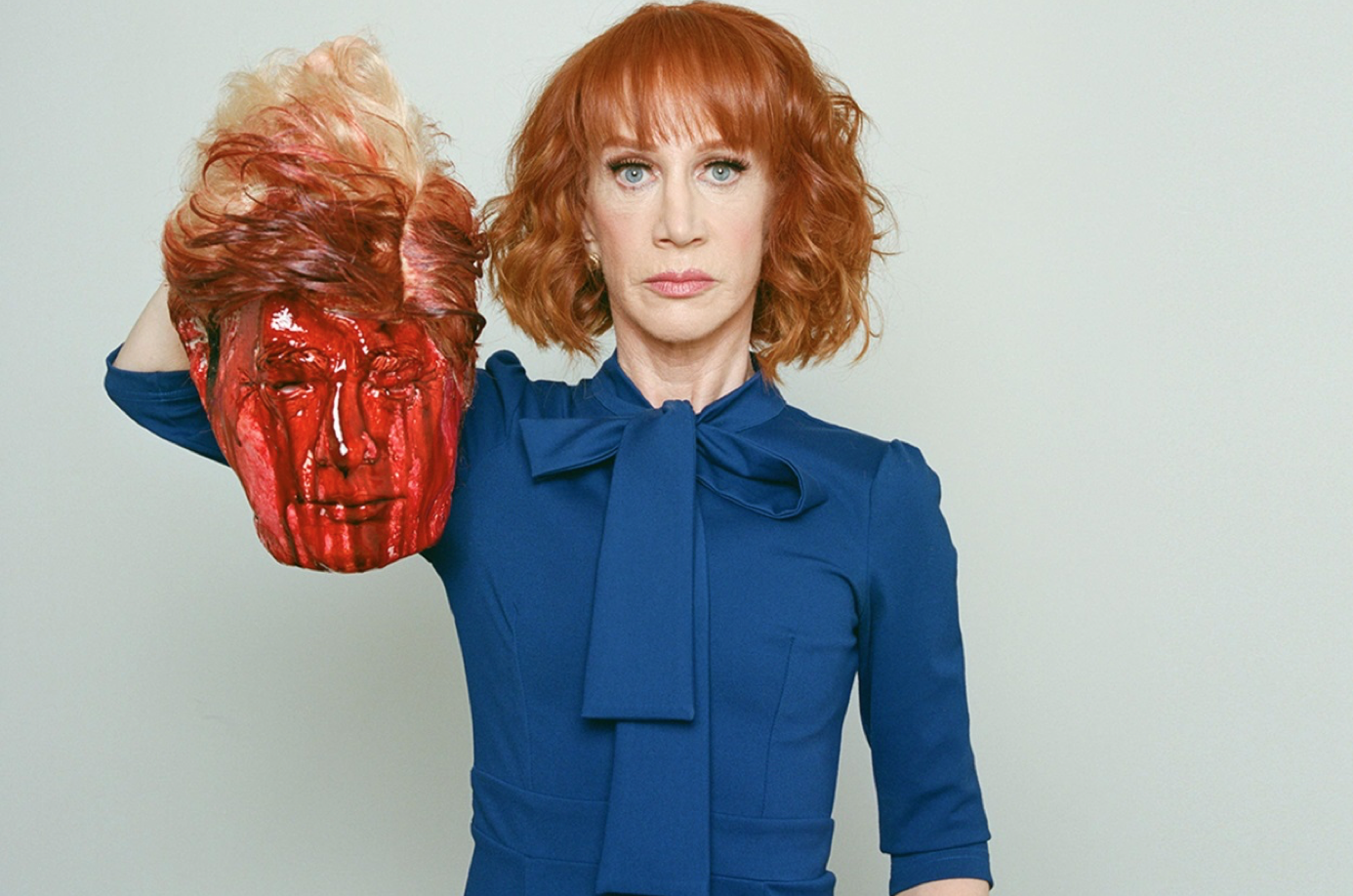
In May 2017, comedian Kathy Griffin participated in a photo shoot in which she posed with a fake decapitated head that bore a striking and disturbing resemblance to U.S. President Donald Trump. The image, released on May 30, sparked immediate public criticism of Griffin and celebrity photographer Tyler Shields because many viewers interpreted it as violent, tasteless, or threatening toward a sitting president. Griffin initially defended the image as a work of art, but the backlash escalated quickly across news media, social media, and political commentary. Critics argued that the photo crossed a line from political satire into imagery that appeared to normalize or celebrate violence.
Griffin soon posted a video apology to social media, saying that she had gone too far, that the image was too disturbing, and that she understood why people were offended. She said she would take the image down and ask Shields to remove it as well. The fallout continued after the apology. CNN announced the next day that it had ended its long-running New Year’s Eve agreement with Griffin, and she faced additional professional consequences from the controversy. Her response primarily used mortification and corrective action: she apologized directly, admitted the image was wrong, asked for forgiveness, and said she was taking steps to remove the image from public circulation.
Key Apologia Strategies:
Mortification, Corrective Action
Video
Transcript
Hey, everybody. It’s me, Kathy Griffin. I sincerely apologize. I’m just now seeing the reaction of these images. I’m a comic. I cross the line. I move the line. Then I cross it. I went way too far. The image is too disturbing. I understand how it offends people. It wasn’t funny. I get it. I’ve made a lot of mistakes in my career. I will continue. I ask your forgiveness. Taking down the image. Going to ask the photographer to take down the image. And I beg for your forgiveness. I went too far. I made a mistake, and I was wrong.