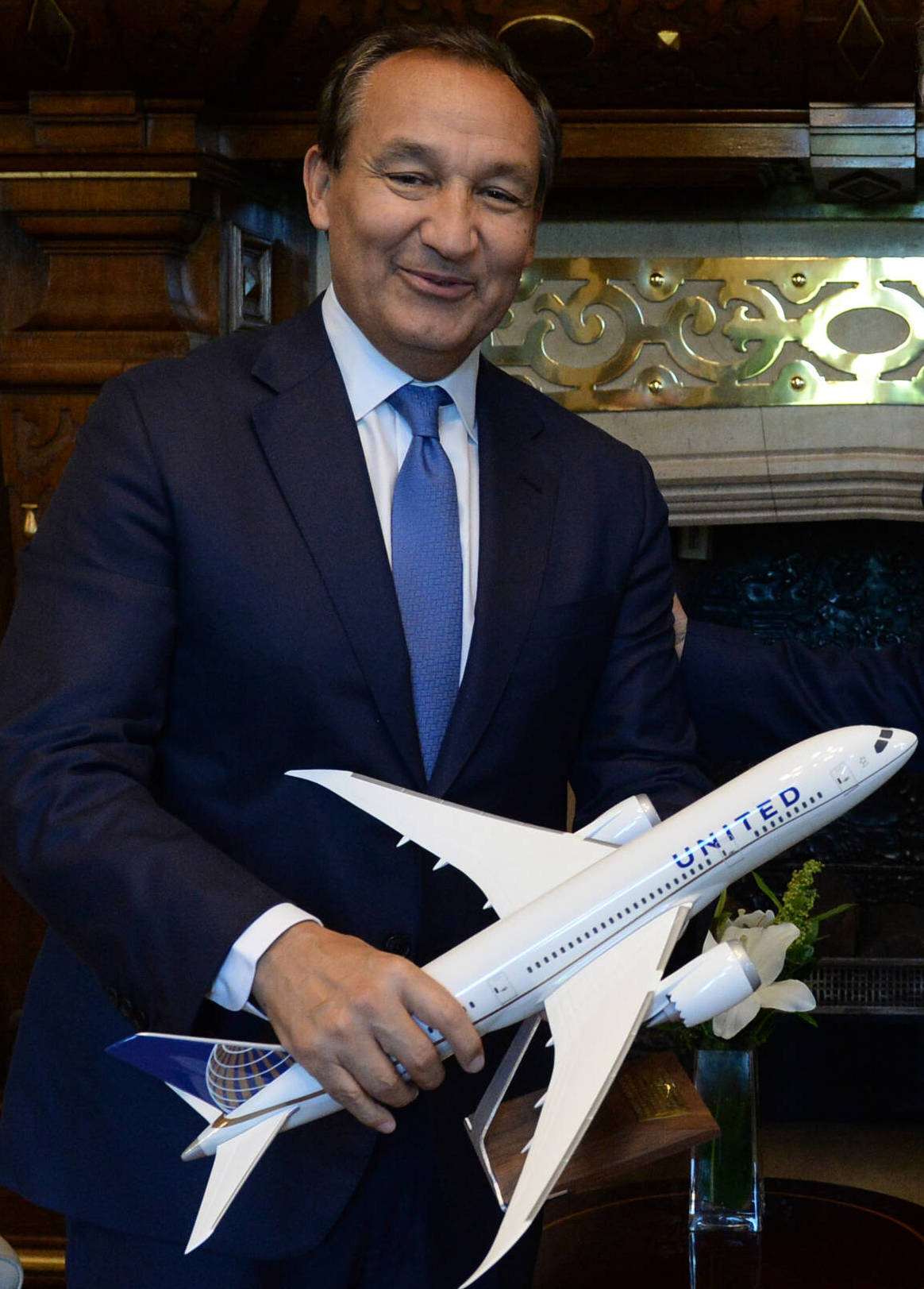
In April 2017, United Airlines made headlines after passenger Dr. David Dao was violently dragged off Flight 3411 to make room for airline employees. Cell‑phone videos showed security officers pulling the 69‑year‑old doctor from his seat, leaving him bloodied and screaming. The incident sparked public outrage and criticism of United’s overbooking policies and treatment of customers. CEO Oscar Munoz initially apologized for having to “re‑accommodate” customers and praised employees for following procedure, which many felt was tone‑deaf. Facing intense backlash, Munoz issued a more comprehensive apology the next day. He called the incident “truly horrific,” offered his “deepest apologies” to Dr. Dao and all passengers, and promised a thorough review of policies. United subsequently settled with Dao, vowed never to use law enforcement to remove seated passengers, and increased compensation for volunteers. Munoz acknowledged the company had mishandled the situation, committed to fixing what was broken and said such an event would never happen again. He stepped down as CEO in 2020, but the incident remains a defining example of corporate crisis management.
Rebecca Jarvis: Oscar, this incident has sparked outrage around the world. There are calls this morning to boycott your brand. What did you think when you saw that video of a man being dragged off of one of your planes?
Oscar Munoz: First, good morning. Thank you for having me. It’s not so much what I thought; it’s what I felt. Probably the word “ashamed” comes to mind. As I think about our business and our people, the first thing I think is important to say is to apologize to Dr. Dao, his family, the passengers on that flight, our customers, and our employees. That is not who our family at United is. You saw us at a bad moment, and this can never, will never happen again on a United Airlines flight. That’s my premise, and that’s my promise.
Rebecca Jarvis: Why not communicate that shame, as you call it, initially? In your initial apology, in your initial statement, you apologized for re-accommodating passengers, and in your internal note to your employees, you talked about a belligerent and disruptive passenger. Why did it take until Tuesday to offer a more full-hearted apology?
Oscar Munoz: I think my first reaction to most issues is to get the facts and circumstances, and my initial words fell short of truly expressing what we were feeling, and that’s something that I’ve learned from. The expression of apology, and specific to the folks I’ve mentioned before, is an important part of a conversation like this because, again, that shame and embarrassment was pretty palpable for me and for a lot of our family.
Rebecca Jarvis: You said this will never happen again. What will you be doing to ensure that promise?
Oscar Munoz: Well, as I’ve outlined in some of my messaging, it is really around reviewing, a fairly deep and thorough review, of a lot of our policies that support this. Specifically, if I were to be here today, as I am, I would tell you that the use of law enforcement aboard an aircraft has to be looked at very carefully. They’re clearly there for a purpose of safety, and we want to make sure they protect us, but for other reasons, I think that’s a policy we have to absolutely relook at.
Rebecca Jarvis: What went wrong in this scenario?
Oscar Munoz: It was a system failure. We have not provided our frontline supervisors and managers and individuals with the proper tools, policies, and procedures that allow them to use their common sense. They all have an incredible amount of common sense, and this issue could have been solved by that. That’s on me. I have to fix that, and I think that’s something that we can do.
Rebecca Jarvis: What needs to change here specifically? Because if you look at the policy, and a lot of people learned this week through this story and are surprised to learn that, in the fine print, you can be asked to leave a flight involuntarily without any compensation as you decide it. What needs specifically to change here? Were those flight attendants, were those employees of United, were they not enabled to offer people more money to voluntarily leave that flight?
Oscar Munoz: I think, again, back to the broader system issue, there are many of those points that I think we need to relook at. There is an incentive program that works pretty well outside of the gate. Clearly, when you get into an airplane and you’re boarded and your luggage is situated, your incentive model needs to change, and I think that’s one of the policies that we’ll look at. We do empower our frontline folks to a degree, but again, we need to expand and adjust those policies to allow a little bit more common sense.
Rebecca Jarvis: In the future, if no one voluntarily decides to leave a plane based on the amount of money that United is offering, will you not put a law enforcement official on to take them off?
Oscar Munoz: We’re not going to put a law enforcement official on to take them off.
Rebecca Jarvis: The law enforcement official will never come on one of your planes again?
Oscar Munoz: To remove a booked, paid, seated passenger, we can’t do that.
Rebecca Jarvis: Have you spoken to Dr. Dao?
Oscar Munoz: I have not. I have reached out to him and have left a message, and our team has tried to reach him on several occasions. We’ve not been able to contact him directly. I do look forward to a time when I can, as much as I’m able, apologize directly to him for what’s happened.
Rebecca Jarvis: What do you think he deserves in all of this?
Oscar Munoz: Well, certainly an apology, and from that point on, I think we’ll have to see. Rebecca Jarvis: Do you think he’s at fault in any way?
Oscar Munoz: No, he can’t be. He was a paying passenger sitting in our seat on our aircraft, and no one should be treated that way, period.
Rebecca Jarvis: There are a number of PR professionals who believe that this was handled improperly by you and your company, and some are even calling for you to resign. Have you considered that option?
Oscar Munoz: No. I was hired to make United better, and we’ve been doing that, and that’s what I’ll continue to do.
Sources
ABC News. (2017, April 12). United CEO feels “shame,” passengers will be compensated. https://abcnews.go.com/US/united-ceo-oscar-munoz-felt-sham-passenger-dragged/story?id=46746594
Aratani, L. (2017, April 27). United and man dragged from flight reach “amicable” settlement. The Washington Post. https://www.washingtonpost.com/news/dr-gridlock/wp/2017/04/27/united-dragging-report-our-review-shows-that-many-things-went-wrong-that-day/
Jacobo, J., & Harrison, C. (2019, April 9). Doctor dragged off United Airlines flight after watching viral video of himself: “I just cried.” ABC News. https://abcnews.go.com/US/doctor-dragged-off-united-airlines-flight-watching-viral/story?id=62250271
Kohut, T. (2017, April 11). United Airlines CEO apologizes for ‘horrific’ removal of passenger from flight. Global News. https://globalnews.ca/news/3372017/united-airlines-passenger-forcibly-removed-ceo-apology/
Ohlheiser, A. (2017, April 11). The full timeline of how social media turned United into the biggest story in the country. The Washington Post. https://www.washingtonpost.com/news/the-intersect/wp/2017/04/11/the-full-timeline-of-how-social-media-turned-united-into-the-biggest-story-in-the-country/
Time. (2017, April 11). United CEO: “We take full responsibility” for forcibly removing passenger. https://time.com/4735141/united-airlines-ceo-oscar-munoz-apology-passenger-removal/